Showing posts with label review. Show all posts

Thursday, 26 September 2013

TV Review - Marvel's Agents of S.H.I.E.L.D


Real life's been busy lately, so I haven't had time to drop by the cinema. However I have been very hyped up with Joss Whedon's return to television, so I have been watching the release dates like a hawk for the pilot of Marvel's Agents of S.H.I.E.L.D.

The story follows events from The Avengers, and sits within the Marvel Cinematic Universe. It was an interesting choice that for the TV follow-up to the highest grossing superhero film, they chose to focus on the 'government agency'. But since it was done by the same guy who gave us Buffy The Vampire Slayer and Firefly, I had great expectations that it was going to work somehow.

I was sad when I realized that this pilot was only 45 minutes, as television pilots tend to be pivotal in helping establish both the longevity, tone and initial fan base of the series, and as such they tend to be epic-fied into something akin to a movie or double episode so that we have enough time to be immersed into their world.

So what did I think of the pilot?

On the plus note, this show looks promising from the pilot. The idea of following how the government agencies goes around doing the background business of keeping tabs on things is not looked at often. We get lots of 'could happen in the real world' crime scene investigation, police drama, mafia stories, law and order, but not much about the actual inner workings of an intelligence organisation dealing with superheroes.

I also liked how the main effort was in keeping the agents human. Every character and personality on the team I liked, with the exception of Grant. I understand he is supposed to be the tough, no-nonsense, mission-oriented muscle in the team, but the pilot did not convince me he can pull it off for an entire series. There is a scene where they went too far in showing he has a 'soft' side.

The biggest positive for me is that they finally have a main Asian cast in this show! It felt awkward for me when I watched Firefly, where all the characters were trained to speak some Mandarin, but there wasn't a single asian character main/recurring cast! Ming Na-Wen is a very underrated Hollywood actress whose most famous role is perhaps Disney's Mulan. She is the same age as my own mother, but still looks so youthful and beautiful, doing fight scenes and working with a cast that is all basically same age as her own children. But her ability to immerse herself into a role is what really makes her an amazing addition to this show. I look forward to seeing what they to with her character. On a side note, Skye played by Chloe Bennet (who is half-asian) is also very very very hot! I think I have a new television crush :)


On the negative side of things, things do feel rushed and basic. They were trying to introduce 7 characters and 2 organisation within 45 minutes. This is not easy, but I think they could have done much better. It feels like they just went with the first plot they thought up of because they were too busy to really write something more unique or interesting. While a couple of twists in the middle section did make way for some interesting interactions, they were so brief that I almost hope they will release an extended edition!

There is another element of the film that was done poorly: the foreshadowing. One of the biggest things that makes us the viewer keep following a show is the element of mystery, the unpredicability of how the narrative unfolds. From the very first scene of seeing Agent Coulsen we are given massive clues of the events that explains how he was apparently dead in The Avengers, but then is alive and kicking to lead this special ops team. I thought that was a trump card they threw away too quickly.

In fact (spoilers ahead), I want to predict two major reveals are for each main character right now (I hope I'm wrong):

  • The Agent Coulsen in this show is, in fact, a clone of the original Coulsen who did die, but in order for him not to break down from having an existential crisis like Schwartzenegger in The Sixth Day, 
  • A large portion of the story will focus on the developing romantic tension between Skye (the really hot computer hacker) and Agent Grant (the really buff, manly man). They will "get together" by end of season 1 or at least confess their love for each other.
There is one thing I hope they might be clever enough to use within their own cinematic universe as the direction of the story.

At the end of Iron Man 3, we know the leader of Advanced Ideas Mechanics, Killian, and his thinktank member Maya Hansen, who created the Extremis virus, died. However a think tank is not just two people, so there are others in their team that are unaccounted for in that film. It is safe to say that while the film ended triumphantly with Tony Stark thwarting their plans to kill the president thus planting their political puppet, those who have not yet been identified to be connected to Killian, AIM, may have formed or be associated with this Crimson Rising mentioned in the pilot.


So overall, I am happy with this pilot. It looks promising. The characters are fun, the premise leads way to many possible scenarios, so I look forward to next week's episode. Hope that now the 'assembling the team' is done, we get some more juicy material and interactions :)

8 out of 10

Nitpicks (spoilers):
  • At the beginning of the pilot when we are introduced to Agent Grant while he was stealing some thing from some rich guy, he keeps switching between the waiter clothing and his own agent clothing, but the way it was cut (with him carrying that super-tech glass platter throughout), it implies he just continuously moved from one place to the next. Where and when did he get changed 3 times? 
  • We learn that the Crimson Rising group were looking for volunteers to be experimental subjects for a superhero serum they've been working on. However it is unstable and strong emotions like anger could make them explode like they did in Iron Man 3. Why don't they screen these guys better? And also why don't you also secure them with more financial stability so they don't have to work in a freaking minimum wage FACTORY that was about to make them redundant?
  • They worked too hard to try and reference all their previous movies. I'm scared that this connection to the Marvel franchise means that Whedon will have creative restrictions in order to make sure the TV show doesn't deviate from the movie continuum.
  • While I really like the cast, the combination of characters, really reeks of a Firefly reboot in Marvel clothing. Then again that's just something a die hard Firefly fan would be affected by.

Wednesday, 5 June 2013

Review - The Great Gatsby


The Great Gatsby, 2013 film adaptation/remake of the book can be summarized by one word: excess. Its heavy-handed screenwriting results in excessive scenes to hammer in a relatively simple idea. Its ambitious attempt to make the film an 'experience' results in excessive CGI and choreography clearly designed for 3D. Its desire to be relevant to the audience leads to excessive references to modern issues. And the overarching theme of the story told is also about excess. However, despite all this excess, it is a powerful film, with poignancy that I haven't experienced at the theaters since Watchmen.

There are many things this film does poorly, but also a few things it does really well that I can almost regard it as a great movie. Between the completely flat narration, dizzying array of party colors and anachronisms, the scenes without words, and especially the character development and chemistry between Dicaprio and his co-stars are what kept me invested.

DiCaprio definitely stole the show portraying Gatsby with virtuosity, and while I couldn't see Tobey Maguire without seeing Spiderman, I think he did a decent job being the awkward insider-observer through whose eyes we can view the roaring twenties. What intrigues me is that this film has no clear protagonist or antagonists; it blurs the moral line for every character, including Gatsby and Carraway. Every character evangelizes a world of hedonistic living outshining the virtues of respectability and responsibility, but wisely refrains from condoning it, simply acknowledging it as the social norm.

This film is a tragedy in its core, a scenic tour into the corroded psyche of our society's wealthiest; a social commentary with no purpose other than finger pointing at the wrong, but offering no solution or redemption. There are deeper truths and revelations enveloped between the lines which are unfortunately packaged in a weakish script, so it is likely the average movie-goer will overlook them and be less rewarded for their two hours.

I have not seen the earlier film adaptations nor read the original novel by F. Scott Fitzgerald, but after viewing this film I believe they need a look at. This is a very good story with significance, but a slightly unpleasant movie-going experience, and honestly I think that is what we should be feeling given the subject matter presented. If they didn't try so hard to 3D-ify the movie, or underline the earlier scenes with modern music in the first act, I probably would have appreciated this film's intentions more thoroughly than I did, but since profit margins are one of them, I think this remake will slowly fade from memory.

Overall rating: 7.5 out of 10.


Spoilers Ahead!


Stop this 3D gimmick

I’m very sure almost everyone who watched the 2D screening of this film would complain about how ‘3D’ it felt and how much it distracts us from keeping our attention on the story itself. The CGI and green screen work for this film is very substandard, it is very obvious when they weren’t really shooting on location, and some of the partying scenes have sporadic edits that I can’t appreciate the effort they put (or didn’t put) in representing the time setting correctly.

There has not been many movies which I have watched where 3D added anything to the likeability of the film itself (except maybe Avatar which really was a final year computer graphics project more than a film anyway), and especially with 3D re-releases for Titanic, Jurassic Park, Star Wars I and many others, there’s basically one word justifying their existence; money!

When directors have the audacity to remake classics they generally employ one of three strategies: they re-imagine it (The Karate Kid), they update it (Willy Wonka), or they simply duplicate it with better special effects/visuals/execution (King Kong). This one falls into the last category, but fails in that respect. Everything else in this film except the visuals, powerpoint text floating effects and 3D-ification is actually good. Seriously, what’s the point of making a film adaptation of a novel if you’re going to persistently print the words the narrator is already narrating?


Oh Leo, poor Leo.

Leonardo DiCaprio has almost never and will probably never play a normal character. He always represents some social outlier, a protagonist with a heart of gold but with serious personal problems, and psychological unwellness. His performance here feels almost reminiscent of Catch Me If You Can, and I am a bit troubled by how baby face he still looks despite almost hitting his 40s.

What I do like about his rendition of Gatsby is that he remains true to his cause. He doesn’t represent some political ideal. He just wants to be a rags to riches success story without the evangelistic component (i.e. “if I can do it you can too”), and also a happily ever after with his pre-war sweetheart as a cherry on top of sorts. I’m surprised the director didn’t salt the character with how the war impacted him, or why it didn’t. The whole time setting of being straight after World War I is kind of glossed over in the first 30 baffling minutes of the film, and Gatsby, who I guess is supposed to be a war veteran, only mentions his war experiences in passing.

You can argue that his vision of the future is so strong and so complete, he feels that everything along the way (the war, the bootlegging alcohol, the affair) are ultimately insignificant blips in his grand picture, that it won’t change who he is or pollute his dream. This is admirable, but it completely wastes the potential study/commentary on post-war economic ecstasy in America, which is now nearing a century ago. The story goes from failed commentary in the first act to a personal story in the second and third act. Even more sadly is that the film works better as character study than theme-driven plot, the latter of which is what I think the novel was like.

I like how he uses Carraway to sparingly channel his inner thoughts so that it’s not all a mystery to the audience, and the awkward neighbourhoodship between them are loosely held by the fact that they’re both ‘poor’ people, in that they weren’t born into extravagance and prosperity. Unlike Carraway though, whose entry into West Egg and attempt to join the world of the wealthy was doomed to fail from day one, Gatsby had a real shot of becoming one of them without being one of them.

Gatsby’s attempts to re-kindle his relationship with Daisy through showing off his wealth, his stories and his ability to blend in was almost successful, except that he still held onto one thing from his past: dignity of the poor. He represents the poor who distinguishes people born into wealth as opposed to those who earns it, granting more respect to the latter. But to the wealthy, rich is rich, regardless of how it was obtained, and respectability is from staying rich.

Gatsby does secretly recognise his ‘merits’ are tainted with the same poisonous content that the rich consume every day and night (which he sells), and is haunted by the necessary dealings to uphold his guise that he earned his fortune. This is why when Tom points it out he completely breaks, and finally shows his most vulnerable side. That single moment when he kills Tom with his stare during the confrontation scene is what made DiCaprio such a juicy actor to watch despite playing very similar roles every time. In one glance he summarises his own character’s insecurities, weaknesses and failures, quickly realising he just lost the game of chess against Tom.

Leo doesn’t disappoint when it comes to his characters’ climaxes, but you do have to get there to be fully rewarded for bearing with him being mysterious, distant and unpredictable for the first two acts.


The despicable rich

There is a narrative overtone in this film to suggest that those born into wealth can only think and breathe wealthy, but despite all they possess, a moral compass is not one of them. Their varying degrees of awareness of the poor indicates that they are not necessarily ignorant of the social problems happening between home and work, but that ultimately they will side with their own kind and remain the privileged. This is a particularly strong trait of Daisy, who represents perhaps the more naïve type.

Despite having the capacity to sympathise with Gatsby’s cause and even the courage to suggest running away with Gatsby to a life of presumed peasantry, it is clear she would not have been entirely happy living in frugality. Perhaps Gatsby knew this about her given his proven insight into the self-indulging nature of those attending his parties, which is why he knew if they were to be together, he would have to continue his charade as a wealthy pauper. Running away was not an option despite Daisy's optimistic proposal in the garden. 

And evidently, during the confrontation scene between Tom, Gatsby and Daisy near the end of the movie, it is not the underground means by which Gatsby gained his wealth that bothered her, but the fact that she doesn’t know whether she can completely forget about Tom which caused the hesitation to commit herself to Gatsby. In two lines of dialogue, Gatsby was relegated to an old flame, a ‘mistress’, a thorn in her romantic nostalgia.

And after Gatsby’s outburst, Daisy perhaps had a moment of clarity about herself, realising her allegiance is ultimately with Tom because they are the same ‘kind’ of people. Even though she yearns for the sincerity, devotion and genuine love that Gatsby can offer her, her need for a problem-free lifestyle proves to trump all else. She yearns for true love, but her blood is rich, which is not the currency of happiness.

Tom demonstrates a different attitude with the poor but ultimately arrived at the same conclusion as Daisy did. He evidently understands his place in society, and implicitly knows what the poor goes through. However, instead of desiring to be a part of their world as Daisy (sort of) does, he simply uses them as a means to experience raw pleasure, something that the wealthy, with all their fabricated sensational parties at the Gatsby mansion, is unable to truly experience.

Ton is racist, sexist, classist, elitist and probably a narcissist, which makes him a bit generic to watch but he does carry weight in every scene, partly because he is Gatsby’s greatest opposition, and partly because he is not as oblivious as Daisy. His clarity of the situation with his wife, and acceptance of his role in society gives him confidence to confront Gatsby, to prove an element of superiority the rich has over the poor, which he does successfully.  He is never confused, never in denial, and most importantly, he perhaps knows Gatsby better than anyone else in the film, including Carraway (the cousin/narrator).

So between Tom and Daisy, who are essentially the two side of the same gold coin, the derivable conclusion is that those born rich, no matter their personalities, interests and relationships with others, will always be and can only be rich. They have a heart, which is why they can feel jealousy, grief, sympathy and anger, but it doesn’t have the same capacity as the poor to be selfless, to be content, to live in uncertainty and be fuelled by hope.

Well, at least that’s what I think this film (or the novel) is trying to imply. It’s not a very original idea, but I would say it is more articulate than other recent films about the wealthy, and I think it’s a bit too surreal and extreme a view to be comparable to reality. (Although people like Gina Rinehart does make my case harder to argue)

So, should we steer clear of ‘New York’?

This is the golden question I left the cinema thinking about. On the one hand I do feel disgust for how some rich people enjoy their wealth and freedom from daily labour, on the other hand we all strive for that freedom. Even if the moral of the story is that people who earn their wealth are morally superior at the beginning, being part of their world may slowly change you. The poor are not incorruptible, they just have less opportunity to be tempted and lured to the dark side. Myrtle (Tom's mistress in the 'valley of ashes') is an example of this. 

But just like this film, if you are willing to overlook the excess and decadence, there is something attractive and fascinating about the world of the upper class, about what life is like after fulfilling Maslow's hierarchy of needs. And the picture is not pretty. You either die seeing the possibility of happiness, or live long enough to be disillusioned by how pointless it all really is.


Finally, the nitpicks


  • Lots of the party music in the first 30 minutes of the film are major anachronisms. It was not only distracting but also confusing for me; what it was trying to say?
  • Tobey Maguire is not a good casting option for the character of Nick Carraway. Not that he did a bad job but his performance is so similar to Peter Parker in Spiderman for someone with good memory I just kept echoing "with great power comes great responsibility" in my head.
  • At the end of the movie, how did Myrtle's grieving husband find his way into Gatsby's swimming pool and shoot him? I can buy that a christian car mechanic owns a gun, but earlier in the film we establish that Gatsby had lots of security guards to stop the media from coming through the gates so how did he get in? I guess the night before when Gatsby asked his cleaners to go home he meant everyone including the guards and servents except the butler.
  • Since Carraway wrote the entire story down, including how Daisy was actually the one who killed Myrtle and not Gatsby, does this mean that a police investigation might start? This is one of those unresolved/ambiguous bits of the film that annoyed me in the same way Rorschach mailed his diary to the news outlet. Wow that's two connections I've made to Watchmen. 

Tuesday, 14 May 2013

Review - Star Trek into Darkness


Lets get one thing clear: I am not a trekkie. I have screened a couple of the Star Trek films and seen a few of the TV episodes in passing, particularly Wrath of Khan. I have also watched the previous Star Trek directed by J.J. Abrams, which I enjoyed (mostly) though I was told it lacked the philosophical depth and thematic layers most of its predecessors. As such, the non-spoiler part of the review will be strictly from my experience of the film in itself and as a sequel to the 2009 version only, not encompassing the rest of the franchise. However in the spoiler section I will let my sentiments about the earlier films in the franchise 'influence' my opinion.

In one sentence, Star Trek Into Darkness lives up to its name and is superior to its immediate predecessor, giving us fun characters, plenty of action and some food for thought about society. This one does explore darker themes than the original and poses interesting (though not very deep) questions in between all the fighting and often incomprehensible dialogue. It has a memorable villain in the form of Benedict Cumberbatch and some juicy performances coming out of the main characters, especially Zachary Quinto (Spock) and Zoe Zaldana (Uhura).

When you have a film that has an ensemble cast like in this film, it is demonstrably hard to develop every main character, but I do appreciate what little we get, even if it's almost feeling like a sitcom at times.

There are a few gaping holes in the story that distract the critical thinker, and many obvious establishing scenes which screams at you the potential resolution of the story, which disappointingly lightens up the film too quickly and strips it of the poignancy achieved just two scenes ago. But if you're willing to turn you brain down to "just here to enjoy some space adventure" this film is worth the price of admission, but I would say a rewatch is not warranted unless you want to learn all the jargon and intricacies of the Star Trek universe.

Overall rating: 7 out of 10.

Spoilers ahead!

To boldly go where Star Trek has gone before

The idea of reviving Khan with a slightly modified backstory was probably the strongest aspect of the film. The first half he was able to fool not only the crew of the USS Enterprise but also us the audience with his John Harrison persona the second half you really couldn't see what he's thinking except for what he shows you. Cumberbatch really respected the original character, and I feel that he pulled off the super-intelligent warrior character as strongly as Ricardo Montalban did back in the 1982, without all the mexican/native american dressup or lovely hair. Some might consider this casting choice whitewashing but it didn't bother me personally as I am not American or a Trekkie. It would have been too obvious who this character was if he resembled the original Khan.

There are a few other easter eggs in the film that may either appeal to or annoy fans of the rest of the franchise, especially with the role reversal of Kirk and Spock as Spock is the one who died in the original, whereas Kirk 'dies' instead. Spock's yelling of Khan's name out of rage and anger is nowhere near as impressive as William Shatner's passing a kidney stone, but I'm smiling for his attempt.

Unfortunately the film's abundance of reference to the rest of the Star Trek world is also what strips it of potentially something more influential. Its unwillingness of the J.J. Abrams to actually kill off either Khan or Kirk in the film rings weak to me, given one of the themes in this film is about self-sacrifice for the greater good. Instead, we get a fake out death with Kirk, and Khan goes back into hibernation. In fact it's been a while since I've seen a franchise movie where they actually kill off one of their main characters. While it's understandable they want to keep their doors open for more sequels, wouldn't it be more interesting if the next film opens with the lementing of a fallen ally?

This is the element they changed from how Wrath of Khan that would've made the film work for me. Indeed they brought him back to life in the next film but nobody knew that at the time, and they were genuinely shocked and affected by the sacrifice Spock made for his crew, leading to the legacy of his philosophy "the needs of the many outweigh the needs of the few".

So this halfway approach to paying homage and being its own creation stunts the impact it has on the audience from a story telling point, as the only major change they made in this film is arguably the one thing I thought they should have kept, even if it was Kirk in place of Spock.


Everyone can be captain

There are three issues raised and discussed in this film: the role of logic versus instinct, the power of emotions such as anger and compassion, and finally the role of the captain. The last one is perhaps the only one I felt was not addressed properly.

I love how casually the seat of the captain is passed around. First film we saw Pike, Spock, Kirk and Chekov "take the captain's seat". Now we see Hikaru Sulu take the seat for a bit as well. While I understand the chain of command style of starfleet contingency planning, I sense the film is promoting the concept that anyone can be captain, provided they are brave enough to take the seat.

This democratization of authority actually messes up the lesson Pike was trying to teach Kirk at the beginning of the film. What are we supposed to take from this film about leading a crew? Anyone can do it as long as they have to? Only those who are mature and wise should lead? Or those who are willing to put their lives on the line for his crew? I felt that the lesson Kirk learns is just the result of him unlearning his development in the previous film, or that it wasn't an issue he had to begin with. Also the fact that Kirk and Spock, being the most senior officers on the ship, is always doing the things themselves, defeats the whole point of delegation and having a crew.

You know the funny thing too is that, I think Spock should be USS Enterprise's captain. He is logical, but he  does have feelings, and after the first film he recognizes it, and has since learned when it is appropriate to feel the emotions. Kirk on the other hand has all the wrong motivations at every step. First he chases after a villain simply as a revenge for Pike, secondly he disobeys his directive because he has compassion for a criminal, and thirdly he sacrifices himself to save the ship even though a ship without a captain is far more severe than a ship without its backup engineer. This type of cinematic cliche makes you wonder whether there is any value in being the leader of a pack when you do everything yourself anyway. All the redshirts ever do is die or look really intense and scared.


Klingons!!

One thing Star Trek fans would appreciate about this film over the past is that there are Klingons speaking Klingon, as well as Uhura who gives it a shot as well. While this scene was brief and they get wiped out embarrassingly quickly, we the audience sorely needed to see some more aliens. I guess the only problem with this is that the warping technology has obstructed our ability to geographically pinpoint the Klingon empire. All we know is they are far away from Earth but have no idea in what direction or how far away.

This is important because for all the filmmaker's effort to integrate this film into the original canon, they are showing surprisingly little of the overall universe, and typically the scenarios are all isolated and feels detached from the rest of the universe, and thus the concept and scale of the 'federation' can yet be appreciated.

Perhaps this was the limit to which Abrams was willing to show. Just cameos of notable elements, characters, species and cliches of the original, but no substantial exploration of the world in which we want to immerse ourselves in. It may be out of fear of the reprecussions from trekkies for misrepresenting or deviating from the franchise, it may just be out of calculated decision in marketing, but again a franchise film has been stripped of a 'great' status in exchange for profitability and general acceptance.


Finally, the nitpicks


  • Protocol emergency meetings for top senior commanders of Starfleet should not take place on high floors in publically accessible buildings with fully visible windows, and definitely shouldn't be written in a regulation book that every Starfleet officer has read.
  • The torpedos are dumb. Aside from its double use as a cryogenic coffin, we see that Carol disarms the torpedo by simply ripping out some unit and bundle of wires, when not two minutes ago she implied that any incorrect severing of the wires would immediately trigger the warhead to explode. That's pretty poor design given it's from a supposedly super intelligent Khan (but more forgivable than Cerberus in Olympus has Fallen).
  • Kirk and Scotty's cell phones. While Kirk is at Chronos (inside the Klingon space) he makes a phone call to Scotty who is on Earth. Even if I can accept that their communication seems to be instantaneous despite being many many light years apart, how can it be that, after USS enterprise's comms were disabled by Admiral Marcus, the cell phone still works? I mean I would have imagined that a communication blackout includes cell phones. Guess we'll be seeing Star Trek phone popping up in the shops soon!
  • Running around on the ship. Given that they have beaming capability which can let them teleport from outer space onto precise locations in a planet thousands of kilometers away, you would think that they have built internal teleportation device to allow crew members to instantly access any part of the ship rather than having to run everywhere. This would be particularly important if say, some opponent shoots and destroyed sections of your ship. Oh wait...
  • Why is Starfleet keeping these superintelligent humans alive for 300 years if they are too dangerous to awaken? They already tried to usurp humanity in a Eugenics war back then, so what makes them think keeping them frozen indefinitely might cause a change of heart/nature later on? I know simply executing them might sound bad, but it's 72 people against the safety, freedom and wellbeing of billions if not trillions. Plus the cost to keep them alive all this time must be burning a hole through their federal budget!
  • Coordinates for Jupiter makes no sense. Khan gives Kirk the coordinates of where the secret advanced ship build by Admiral Marcus. But there can't be coordinates for a planet that is in active orbit. Jupiter is orbiting around the sun, moving at speeds of over 13km/s. The universe has no preferred inertial frame of reference, thus by the time Scotty got to those coordinate Jupiter would have flown away to another coordinate. Also given how large the universe is, and how much of it Starfleet seems to have explored already, an 8-digit coordinate would only give a resolution of a solar system, kind of like trying to find your street while Google Maps is zoomed to see all of Australia.
  • The use of Khan's blood to revive Kirk was a bit too obvious.
  • Jim Kirk's reading of the famous Star Trek quote isn't as powerful as Leonard Nimoy in the previous film.
  • Carol sure got over the gruesomely visual death of her father fairly quickly! 

Tuesday, 7 May 2013

Review - Olympus Has Fallen


After following the Malaysian General Election over the weekend I suddenly gained an appetite to watch an action flick about overthrowing governments, so this flick came to my attention. I originally had no intentions to watch it as I felt it was going to be another re-iteration of Die Hard or even similarly themed films such as Harrison Ford's Air Force One. But the original film I planned to see is not showing after work hours, I guess this will do for now while I wait for Star Trek to come out next Tuesday.

Olympus Has Fallen teaches me that Americans are proud to be Americans, and that the world would crumble if America falls. And if you forget this fact after Aaron Eckhart utters "don't negotiate" prior to capture, don't worry. They will remind you again and again and again between the action sets.

The story didn't surprise or thrill me due to its faithful following of the Die Hard formula (some bad guys take over a building to negotiate for something, using hostages as the bargaining chip, while a lone rogue picks off the bad guys one by one more effectively than the useless police/military/government sitting helplessly in the sidelines). Everything I thought would happen did happen, though compared to many of its predecessors, it takes a lot more liberties in the story's scenario, and seemed unashamed, without subtlety, of how it is just a weak effort to cash in on recent American interest in Korea. Removing the context reduces this film to be a 2 hour reminder that Americans should be very proud to be Americans, and if you are not American you should become American!

As an action film I cannot condemn nor condone it; there are nice fight scenes but nothing innovative or memorable. The fights are quite clear and easy to follow, but I have my reservations about whether the White House, or more accurately Washington D.C. is really susceptible to such an attack after 9/11. It's codenamed Olympus for a reason.

Gerard Butler portrays a convincing former Secret Service Mike Banning who is haunted by his failure to save the President's wife in the past and has burdened himself with the responsibility to save the President from the terrorists. Together with Kang, the main terrorist played by Die Another Day survivor Rick Yune, they are the most bearable part of the film to me because their chemistry and equally strong-willed personalities and motivations is all the real character interaction we get; everyone else in the film is just there to fulfill a cinematic function or character stereotype, and poorly at that.

To the casual movie going audience, I recommend if you just want to watch action and don't care about story and characters as me, you are still better off watching Iron Man 3, or the upcoming Star Trek film. To those who enjoy picking apart films like me, this one is gold, but don't expect to feel satisfied watching this film, unless you are proud to be American and need a 2 hour quasi-propaganda to remind yourself of it!

Overall Rating: 5 out of 10


Spoilers ahead...


Negotiating the plot.

One of the elements of this film that bugged me the most is its insistence that the United State of America does not negotiate with terrorists. And yet at every step of the story we see how not only the presidential/military staff at The Pentagon slowly give in to the terrorist demands, but even the president gives in not once, not twice, but 4 times to terrorist demands so that he doesn't have to be directly responsible for the deaths of his fellow hostages. The only person who personifies and stays true to this American principle is  the rogue who I guess at this point embodies the real America since he never gave in or gave up.

The end of the film shows the president embracing how American he is by saying that America has won again because they stayed true to who they are and stayed united even under despair, but really it was the underdog who did everything, and so really it is stolen glory and they neither earned nor deserved the proclamation of American supremacy.

I call this quasi-propaganda for this very reason. If the characters playing the White House administration truly wanted to portray America's "we are not afraid of terroists" then none of the hostages should have given up their bits of code to Cerebrus (we'll get to that), and the terrorist's real plan would have failed. They should have welcomed death as an honorable alternative to surrendering their keys to allow the enemy to open pandora's box. And as a side note, they should know they're dead no matter what; that's how skilled terrorists always work. People should know this fact if they studied a Bachelor degree in casual movie watching.

So a true "no negotiations" policy would have made the story much shorter, but the message would be much stronger and effective. Sure the president and vice president would probably have died before Butler could  finish all the levels to get to the big boss, but by not giving in they showed that you cannot terrorise America. You kill the president the Vice president will take over after SWAT eventually wipes you out. And even if you kill the Vice president too (which they did) there's the speaker of the house. The people will just elect another president after this blows over. And because the film took a more middle-of-the-road approach to show the humanity of Americans it actually illustrates how the "no negotiation" policy doesn't work in practice because it dehumanizes the leaders if they make immoral decisions on principle. But still, proud to be American!


The Butler vs The Kang

Gerard Butler's performance as the rogue is convincing and enjoyable, possibly due to my positive experience of his efforts in Law Abiding Citizen, and that he didn't sing in this film. His relationship with the president's family was established hastily, but not really explored after the first 5 minutes. You can only really see the relationship through Butler's disillusionment post-accident, and his determination to get to the bunker post-occupation.

Kang is also a rogue, except his motivations are even more deeply rooted in national grief, hoping for the reunification of North and South, while blaming Americans for interfering with the process. He is no different from any other hatred-driven, single-minded terrorists in hostage-rescue stories since the 1980s. However I am grateful they did find an ethnically Korean actor to portray the character at least.

Their banters are engaging, they have equally fierce spirits and know how to push each others' buttons, because they actually have similar personalities albeit different objectives. Sadly their fight scene at the end was far too short and honestly, I felt like they deserved a proper climax and some famous last words. But all we get is Butler keeping his promise to stab Kang in the brain with a knife.

All this positive about the film is easily offset by horribly written side villains, in the form of ex-secret service traitor Dave Forbes. While his acquaintance and colleaguehood with Banning is established prior to the terrorist occupation and him turning sides, his motivations and how he got engulfed in this conspiracy is really murky. From what the film has shown me he is the only insider who helped orchestrate and organise the stolen USAF warplane, the next-generation Hydra weapon (which by the way is not even close to this-generation weaponry) AND somehow managed to ensure he would be allowed to be part of a heads-of-state meeting despite no longer being in the secret service or having any ambassador/auditing responsibilities with the South Korean government.

This character's presence and role in the film is not merely a nitpick (don't worry will be quite a few), because he is perhaps the trump card of Kang, and so you would think he should have been the real villain and the one Butler has the most personal fight with. But no he gets taken out by Butler in 30 seconds, apologises for his actions, and dies after a redemptive act to help Banning, which totally and unforgiveably contradicts his deep hatred of the American way not 20 minutes earlier in the film. I guess he just couldn't resist the Butler charm.

Where is the love?

Another weak point of this film is Banning's love interest. After the opening scene we fast forward 18 months to see Banning has a neglected-but-still-important girlfriend/fiance/wife? She doesn't contribute anything significant to the story, and yet we get 5 scenes fousing on her. One where we establish she lives with Banning and is romantically attached to him, three where we see her at work as a doctor in the ER, presumably in a hospital close enough to be the emergency centre for the White House casualties. And the last one as she rode out with the ambulance to receive the wounded president, where she stares into Banning's war-torn body but with a facial expression of redemption, restoration, but says and does nothing. What was the point? Was there a message or is it symbolic of something? Not clear!

None of these scenes show how she helps Banning do anything. She doesn't even fulfill an emotional function because Banning sees her more as an obligation, a distraction, a personification of normality which he can't embrace. She doesn't get kidnapped, shot, killed or even know about Banning's journey into the terrorists' lair, so we don't see her crying or worried for her man in the cinematic cliche sense. You could write out her character and the story would be equally good (or bad). At least the president's wife had the excuse of needing to die to cause the distancing between the president and Banning. The use of the "Noooooo!" cliche when she died kind of killed the mood for me as well...moving on!

The relationship between Banning and the son is okay, and I characterized this relationship as love because we are supposed to see Banning as a godfather to the president's son (Connor is his name I believe). I mean they do pull Chekov's gun pretty early in the film with Banning testing the kid's intricate knowledge of the White House's secret passages and hiding spots. Guess this kid is also proud to be an American living in the most American building in America.


And the useless, hopeless military that America is proud to step on

Another glaring problem with this film, as with many Hollywood produced action films is its irreverence for their own soldiers and generals and military scientists. These are the people who protect you from the terrorists, keep enemy nations at bay and assist you when natural disasters strike, and you repay them by portraying how ineffective, stupid and stubborn they are? The concept and design of Cerebrus (the self-destruct mechanism for America's nukes) is also extremely stupid but I'll get to that in the nitpick section.

I'll admit I don't read that much into America's military history, but as far as I know most of the international wars that included America, they were on the winning side right? What twisted enjoyment does the director/writer think the audience gets from seeing its own security walls crumble? To see their weapons used against themselves? Suddenly they're not proud to be Americans! The very thing that helped Americans win America from the British was war, and after a few centuries you'd think they are pretty good at their job, but movie logic trumps reality any day!

A final note about how American this film is: the music at the beginning of the movie; well it's totally a knock off of the anthemic opening to Air Force One, another very American film with a pro-American message aimed at making Americans proud to be in America! I personally think America is more than what these films portray it to be, just as most real Americans know Australia is more than Skippy the Kangaroo and Waltzing Matilda. So I hope Hollywood would stop making these kinds of stereotyping, unoriginal and over-patriotic films, and that I should avoid them myself.


Finally, the Nitpicks


  • As part of the terrorist occupation of the White House, they managed to get their hands on a US Air Force plane to attack the White House and the nearby civilians from the air. It is intercepted by two fighter jets which are taken down pretty quickly but this all taking place right over the Capitol Building. Would the plane, given the know it's an unauthorized flight into a restricted airspace, really have allowed this plane to get so close to the White House before discovering it and threatening to shoot it down? Also given its location and trajectory, wouldn't shooting it down cause massive damage to the White House area and countless civilian casualties?
  • While the compromised USAF plane is shooting at the ground, we are shown some of the guards on the ground have guns which they are firing back at the plane. Did they seriously think they could shoot it down? Guess when you're in a state of panic you'll do anything if you think it'll increase your chances.
  • How did Forbes (the inside traitor) get access to so many things for the terrorists like the USAF plane, the Hydra weapon and (I presume) the garbage trucks with machine guns? Sure he was ex-secret service, but that's a very different government department to the Air Force, Defence Science and Waste Management. There must be another insider traitor!
  • How Cerebrus can be activated is stupid. The point of giving multiple people bits of a password is so that access is only granted in the presence of all three individuals. But giving it to both the President and Vice President is dumb because the purpose of Vice Presidency is to be the acting President if something happens to the President. Cerebrus seems to be useful for one of those "if something happens to the President" and they can't both be essential personnel to the unlocking of the tool.
  • How Cerebrus works is stupid 1. So in the film they say that Cerebrus is an isolated system which is why they can't turn it off from NORAD or Pentagon. But they can monitor how many of the codes have been entered and whether it is activated/deactivated as well as the missiles it has queued for self-destruction? So then how can it be called isolated if everyone can see the status? Also if it's so 'isolated' why is the deactivation code in the Pentagon? Shouldn't those three code-holders be the ones holding the means of deactivation? Yeah. Very isolated system indeed.
  • How Cerebrus works is stupid 2. Cerebrus as the film states is intended to disarm any launched nuclear weaons by means of self-destruct, to prevent it from reaching its intended target. Firstly, most nuclear warheads in existence today already have a safe way to self-disable in case of misfire or change of plans mid-launch. Some do explode but not in a way that would excite the nuclear warhead and cause the holocaustic chain reaction. Secondly, even if you couldn't self-destruct the missiles without causing the nuclear component to explode, blowing them up in mid air is probably more harmful than to let them hit their target, as nuclear explosion higher in the atmosphere causes Electromagnetic Pulses, which cover a far greater radius and shuts down all electronics including pacemakers. Read the article on XKCD for more information.
  • When the terrorists demanded Pentagon to pull out US troops from Korea, did they really have to comply? Why don't they just fabricate the news and 'tell' them they've done so? Also how did the media get wind of it so quickly? Was there a journalist sitting in the situation command center with the generals and surviving white house administration?
  • How did Kang manage to get the last Cerebrus code when the president clearly showed his commitment he will not give his third? If it can be brute-force cracked (i.e. trial and error) then some computer programmer really needs to be dismissed over such a poor design. On that note, wouldn't it be an awfully risky to require the code-holders to remember their codes? What if one of them forgets? How will the reset their bit of the password? See what I meant earlier by taking liberties with the story's scenario?
  • Countdown clock cliche which gives Bannings ample time to take out Kang and his last few henchmen, ensure the president is stable, and work on typing in the deactivation code. Because we might still want our missiles to hit our target in the end, so we must install an abort button for an abort button. Classic.
On a side note, someone actually brought their baby to watch this MA rated film in the session I went to. And no surprise, the baby started crying once the gruesome, unrelenting fighting started. Parenting lesson needed.

Tuesday, 26 March 2013

Review - Oz The Great and Powerful


I did not enjoy this Oz prequel.

When I first saw the trailer for this movie, I was fairly hyped up. The colors and visuals looked outstanding, the idea for the story, while done to death, seemed like it would be a faithful and consistent prequel to the 1939 classic, while providing us a fun experience despite knowing what the ultimate fate of Oz is going to be going into the cinema.

But, while viewing the film tonight (yes I know it's already been out for like 3 weeks; been busy), I realized there's something else I didn't notice before (and probably should have before I chose to watch it). This is a G rated film, which means it is meant for kids. So I cannot really assess this film the same way I normally do with other adult-oriented films...or can I?

<Spoilers>

Sam Raimi, 1939 and Elphaba


The director of this film is Sam Raimi, who also directed the earlier Spiderman trilogy (not the current one). He also managed to drag along James Franco which, in my opinion, was a fairly good casting choice as the deceptive charmer that is Oscar Diggs. I find that Raimi's sense of humor has been hit and miss when it comes to blockbusters, and in this film he's wisely toned it down. If he didn't I would have really hated this film.

Now the reason I only partly hate this film is because there is content in this film which pays respect to its most famous predecessor, The 1939 Wizard of Oz. I imagine most children would never have had the privilege to be introduced this cinematic classic, except maybe occasionally hear someone sing "somewhere over the rainbow" at <Country>'s Got Talent, which is perhaps the most famous song from that film, and I dare say one of the most important songs to usher in 4 decades of musicals and films which followed its initial release.

When Oscar actually arrives in the land of Oz, his hot-air balloon does briefly fly over a rainbow, which I'm hoping is a subtle wink to the adult audience, who at least a percentage would've taken a glance of the 1939 film this film precedes and understood the reference. There are also a few gentle references littered throughout the movie of the origin of the tin man, the scarecrows and the cowardly lion (and apparently even Dorothy's mum makes a cameo).

Unfortunately, this origin story of Oz and the witches does undo some recent efforts in expanding the story and world of Oz, specifically the musical Wicked. If you have watched this musical you would have experienced a very different back story to the witches in Oz as well as the character of Oz himself. There is no Elphaba in this origin story, yet there is a Glinda, and based on this story Glinda knew Oz before he established himself as the Wizard, as opposed to having met Oz post-ordination.

Keeping in mind that there are dozens more adaptations of Wizard of Oz, including prequels, sequels, midquels and spin-offs, I guess I can't be too harsh when this doesn't fit nicely with the other two aforementioned productions. But it means that I need to throw away any prior knowledge of Oz and its inhabitants if I am to embrace the world this film introduces, which is hard when they do reference at least one other film related to this setting.

At least they're not abandoning this film to a dead-end?

3 D's: Distraction, Dizzying and Disappointment


I've never really been sold that movies should be filmed with stereoscopy in mind, which from the opening sequence I could already tell they were planning to reward the parents who paid the extra $3 to go see this in 3D. I did not see this in 3D, and I never do the first time I watch a film (unless it's a big group of friends and I'm not wearing my review hat). The last 3D film I watched was Wreck-It Ralph and surprise, the 3D added nothing to my experience of the film (it was a good film nonetheless).

When watching the 'visual' sequences in 2D, especially the hurricane into Oz, it was really hard to digest because of the overt clarity of each frame, which actually undermines the visually entrancing world the programmers worked hard in. Our brains can process 24 frames per second but not 24 photos per second. Evidently this wasn't an issue in the 3D version, but in 2D I found myself looking away from time to time to give my eyes a break from the overwhelming sharpness and surprisingly intense movement. The camera is just panning around the scenery but when those purple butterflies scatter on the screen it's more like having a thousand butterflies flying in front of my face pointing led lights at me.

I wouldn't say this causes major problems to following the story, because during the drama and dialogue scenes it's filmed normally. It is however disappointing because if we cut out those sequences only made for kids to enjoy in 3D, the film could be 30 minutes shorter.

You can also tell that they've designed the characters with visual association in mind. Why do the witches have elemental powers? Theodora with Fire, Evanora with Lightning and Glinda with Water I presume (since she can create mist, wind and bubbles). Are they like Pokemon? Then Evanora should be weak against Glinda, but then again she is in an evolved form so I guess she has a level advantage.

This decision to give each witch unique powers does not contribute much to the story. It is strictly a way to manipulate our emotions about each witch to more firmly associate them with a moral faction. Fire and Lightning are 'bad' powers, while Fog and Bubble are 'good' powers. Are they tied to the true nature of that person? Do the witches have to select their element when they first start training like you pick Bulbasaur, Squirtle or Charmander before leaving Pellet Town?

"You don't know much about witches do you?" ~Evanora

I'm probably reading into this a bit too much but drinking all that apple juice is making me want to crossover some of my childhood shows.

The 'almost' redemptive side characters

While I did say James Franco was a good casting choice for Oscar, I didn't like this portrayal of the character. His journey from despicable con man to good-natured con man was very clunky and even at the end when he decides saves Oz, it feels like his change of heart happened off screen. That scene with the China girl it seems like he already changed his mind about leaving even before tucking her into bed. So yeah, his character development is a fail in my books.

The witches were pretty one-dimensional. The bad witches you could tell immediately that they were bad, Glinda you could tell immediately that she were good.

The things I did like in this film were the two small guys: the winged monkey Finley and the China girl. Their character developments were had some scissor cutting and gluing, but Finley got a few chuckles out of me here and there (especially the banana joke), and the China girl did move me a bit when it was time for some drama.

Unfortunately, these moments were stripped of their power on us the audience too quickly. After the touching scene where the China girl gets fixed by Oscar while grieving the loss of her family, the next scene is the "annoying kids wants to follow along" cliche, which really takes you out of the film, almost like Sam Raimi said "okay, we can't make this movie too serious or the kids will get uncomfortable". I think there were a total of 4 scenes that had real emotions and stakes, but never lasted more than 1 minute each.

Well at least I did like the side characters. By the way, Finley to Oscar is eerily like Donkey to Shrek. Another theft from Dreamworks?


Now for the REAL hate

I haven't addressed the two biggest problems I had with this film, so lets talk about that for a bit.

Firstly, the lesson taught to kids is really messed up. While escaping the flying baboons in the middle of the movie, Oscar and Glinda fly in bubbles towards the 'safer' part of Oz, whereby they must pass through a wall which only those noble and good-natured will be able to pass through. That's basically God in the form of a bubble, and along with the ending of this movie, suggests that you are born to be good, or born to be evil, and that no matter what your current actions, thoughts and motives are, you are still what your underlying nature is. It is telling kids that "some people are just born to be evil". I thought the lesson should be "it's not what you are, but what you do that defines you".

In my opinion Oscar was a selfish, narcissistic, unethical and overall despicable womeniser in the first half of the film, and if he died during that hurricane he would've died an evil man. But he redeems himself by choosing to stay and do what he can to protect the people of Oz from the wicked witches, so that at the end of the film he becomes good, through his current actions and choices. Movies for kids need more effort than for adults because they have less experience in discerning what they are fed in films. I'm not saying they're sheep that will just believe anything given to them, but certainly they are more influenced by it. So in a way, filmmakers should put more effort and thought and heart into making children's films than for adult films, and so I think there wasn't enough effort in this one.

The other big problem for me was that freaking hot air balloon. I was going to save this for the nitpicks but it was too big a blunder for me. How in God's name did that balloon not be torn to shreds in that tornado, where debris is flying at speeds no less than 80kmph if it can lift up a carnival wagon. Statistically the balloon would've only survived maybe 15 seconds before popping and leaving Oscar helpless to an inevitable drop. Maybe magic from Oz protected it but it's never explained nor justified.

This is especially annoying because once he does land on a running stream in Oz, some rocks punches a hole in his basket pretty quickly, which if it's a 19th century hot air balloon, the balloon itself is probably made of sackcloth and paper, while the Basket is made of Wicker, which is many times stronger and more resilient to impact with other solid objects, especially sharp ones. Sackcloth and paper could easily be punctured by one splinter wood travelling at dart throwing speeds. I guess someone's magic must have protected the balloon, though no idea who was controlling it.

</Spoilers>

Prestidigitation!

To my slight embarrassment I had to google this word. Oscar mentions it with grandeur at least twice in the film, and apparently it's just a fancy word for "sleight of hand". I think the marketing team pulled off a sleight of hand trick and made me go see this film.

I can see how kids would enjoy this film, but there is not much in it for me.  The occasional jokes were insufficient to save the show. Too many times I had to look away, too easily I could predict how the story unfolds. There wasn't anything majorly bad, but also nothing majorly good. It's mediocre, and if it were one of those carnival sideshows I'd probably only put in my smallest change to commend them for the effort.

To paraphrase Theodora, like Oscar himself, the film is not so great or powerful.

4 / 10.


And finally, the nitpicks

1. There was a random Asian dude among the crowd in the second act, when Oscar was trying to decide how he should respond to the hopes and expectations of the good people of Oz. You can obviously tell he's Asian and stands out in a crowd of Anglo-saxons like a sore thumb. Why even put him there if he doesn't say anything or do anything? It's just random! Must be the new Hollywood quota. Like those poor Asian S.H.I.E.L.D. agents who die within the first two minutes of The Avengers and then we see no other Asians throughout the rest of the film. I wouldn't cry racist but I would caution that if you're going to fill a race quota in your film, give them something to do, like Hikaru Sulu in Star Trek.

2. How did this tornado transport Oscar to Oz? Was it a wormhole? Is Kansas really within Tornado-transportable distance from the Land of Oz? I want to know about the geography or physics of it! Three different movies I've watched about the Land of Oz and none of it explains how the two worlds are connected!

3. Who made that prophecy about the coming Wizard of Oz? Are we going to have another prequel to explain the motivation?

4. Now it is established that when witches cry their tear burns their face and leaves scars. This is the first thing the film teaches about witches, which it basically abandons when Glinda cries during the climax of the film, tears for the same reason, but no acid-burning effect? Hmm maybe only wicked witches have acid for tears.

5. Oscar, Finley and China Girl immediately believe Glinda isn't the wicked witch because she looks pretty and she tells them an alternative backstory with no substantial proof to back up her claims.

6. Citizens in Emerald City protest to Theodora and Evanora's public execution of Glinda despite everyone believing she is the Wicked Witch who killed her own father. There were no scenes that establish citizens doubting or questioning of the original rumors.

7. The "China town" sign after picking up the China girl for the journey, another pointless Asian joke...no idea why it was funny but I guess it's as good a cultural reference pun as they could think of.

8. Robert Downey Jr would have been a much more ideal casting choice for Oscar compared to James Franco, but I guess he's too busy working on Iron Man 3, which I am hyped about!

9. Mila Kunis' make up when she turns green is worse than the ones on Elphaba in a high school production. Apart from delivering one good witch laugh the rest of her portrayal as the new wicked witch is just unconvincing.

10. There were no songs I could singalong to. There was only one song briefly sung throughout the film (by the munchkins) but it's unbearable, forgettable and I wanted them to stop as much as Oscar did.

11. So Glinda is a witch, but her father was the King of Oz, which means he was the former Wizard. Does that mean Wizards give birth to Witches now? I swear something is missing or wrong here...or did my understanding of European folklore just get mangled up?

12. Who was Glinda's mum? God Disney movies and their dysfunctional families >.<

Wednesday, 16 January 2013

Review - Wreck-it Ralph (2012)


Okay so a few days ago I ranted extensively about The Hobbit, so lets move onto the better and final film I saw in 2012: Wreck-It Ralph. To fully appreciate how grateful I am for this movie's existence, we need to travel back a few decade and look at other movies based on games.

Unlike the superhero genre which officially entered mainstream hollywood in the early 2000s, there was never the same level of success for games. We had stinkers like Street Fighter, Mortal Kombat, the Pokemon movies (except the first one), Double Dragon, The Super Mario Bros Movies, Tekken, King of Fighters etc, which while not terrible and can be kind of fun to laugh at, was way over the top and poorly adapted the game from which they were based on. Then you also have the infamous productions by Uwe Boll such as Alone in the dark, BloodRayne, Farcry and The Third Reich. And finally you have the straight to home video masterpieces with limited or no theatrical release such as Final Fantasy VII: Advent Children, Tekken: Blood Vengeance.

Perhaps the only ones that come even close to moderately decent are Tomb Raider and Prince of Persia. So when Disney decided to give it a go, I was not very enthusiastic and nearly opted to skip the film altogether. But then while travelling in Hong Kong some friends decided to watch it together, so I ended up seeing it anyway. And am I glad I saw it!

First of all, I need to address a secret about this film which I think most people who saw it were somewhat upset about: lots of the familiar arcade game characters (like the ghost from pacman, bowser from Mario bros) that you see in the trailers, well that's basically their only scene. Most of the story isn't really about them and is more focused on fictional games that never existed.

However I was quick to forgive this when what followed was not only 90 minutes of fun dialogue, clever references, visual wonders and memorable characters, but also a surprisingly believable and compelling story about the life and death of arcade games and its characters.

In some ways this film is like a summary of many jokes and parodies and fan productions about the video game characters which has been flooding the internet for a long time, but I was taken aback at how convincing and human these characters were, and how invested I got in the development of the story. The characters had depth, their relationships were genuine, their struggles identifiable, and aside from the villain being slightly one-note, I think this was the video game movie everyone wanted to see for decades. If only they do it this well for my game (which by the way is Runescape)!

Spoilers ahead!

The most interesting character to me in this film was Ralph. While I've seen his character story in other reincarnations before, I think this is the first time I've witnessed it in a movie for children. When Ralph destroys Vanellope's racecar to stop her from running a race which might result in her deletion, I was on the edge of tearing up a little bit.

The message about how protecting someone you love may involve destroying their one dream and losing their friendship is not only a harsh one, but also a brave one. Sometimes to be the hero, one must be the villain in the eyes of those they are trying to save. While being Disney everything works out in the end and they reconcile, but when seeing this scene I was reminded of Watchmen, another great movie which offers the same decision. I don't know how well the kids would have reacted to that scene, but even if only the adults grasped it I think it's a welcomed development.

Another great scene was the backstory to the Sargent Tamora from Hero's Duty. I just couldn't stop laughing at the harshness and extremeness of the way her past was programmed. And it's really fun that these character recognize that their reality was constructed by some game designer, and yet they still convey the same emotions about things they know never really happened. I think Tamora was meant to be a parody of the more modern FPS shooter games representing the brute, harsher genres, but still human and for the most part believeable. But did they really have to stir up a forced romance with Fix It Felix? That story arc just made me feel awkward as their chemistry is about as strong as Katniss and Pete from The Hunger Games.


While praising so much about this film overall, I do have one major issue (aside from the nitpicks) with this film, and that is the behavior of those game characters who mistreat Ralph and Vanellope. For some reason The other racers in sugar rush are very bland and reminiscent of poorly designed high school bullies. They are just mean because they are programmed to be mean because Vanellope is (at the time) the glitch, the weird one, the outcast.


Prejudice is an important lesson for children but the film's portrayal of bullies are surprisingly extreme and oversimplistic; there isn't much exploration behind why they are mean to her. The only rationale is that their memory of her as a princess was erased so they are not aware she has rights to participate in the races. Does that immediately warrant hostility and segregation? The same could be said of the civilians in the Wreck-It Ralph game. They know Ralph is only the bad guy because he's programmed to be a bad guy, so again are they just programmed to be jerks to him?

I guess the intention is to warn children not to act like that, because it hurts other people, but as an adult we know that there are often more than meets the eye with bullies; often they are bullied themselves or have other personal issues and need to be addressed separately. I guess this additional character layer would make the movie too hard to digest for kids who are still learning how to spell "discrimination".

Apart from that, I really enjoyed this movie. It is living proof that the video game genre has not yet game overed. The ending song was also surprisingly catchy, and every scene and dialogue mattered. It was a satisfying movie and I hope to see a sequel in the near future.


8.5 out of 10


Extra Nitpicks

None! I think I've covered everything I can remember.

Thursday, 29 November 2012

Skyfall (2012)


From an objective perspective, this film has successfully captured not only the essence of the James Bond character from back in the 60s, it has demonstrated understanding that spy films are great not because of the villain's plot or the gadgets the agents can use, but rather it is the characters that make it interesting. This film was the first Bond film I really enjoyed on first viewing, but is still my second favorite James Bond-related movie overall. Nothing has yet to trump Stephen Chow's spoof of the character. :D

Skyfall is film I cannot really talk about without spoilers, so I'll give my overall recommendation first before I analyse this movie to death: It is definitely worth the trip to the cinema if you haven't already. The action is great, the dialogue is witty and memorable, there are many beautiful sets that they take their time showing which allow you to intimately embrace the world of Bond, and the characters' interactions are unbelievably enjoyable in many scenes. There are aspects of the climax which I felt was a bit unconvincing and out of place, but the ending is a satisfactory precursor to another 50 years of 007.

8/10

Okay now that I've gotten that out of the way, here comes the real deal.

Spoilers from here on!

Having been brought up in the Pierce Brosnan era of James Bond (Golden Eye, Tomorrow Never Dies and Die Another Day), my first impression of the character was of a boy who fancied himself a playboy with limited moral sense of direction and unexplained, unjustified loyalty to his country. The films were always focused on the high-tech gadgets and increasingly stupid scenarios, as if escalation is the only way to keep an audience.

When Daniel Craig took over, and with essentially a restart of the character from its very origin (Casino Royale). Suddenly the world of Bond became very gritty, very bare, and certainly a lot bolder and much more personal, and so I became much more invested in the characters and less concerned of the action scenes and intricate plots. While I actually liked his take on the character, Skyfall is the film where his personality, character and motivation is fully formed.

M (Judi Dench) was also a delight to watch. Being not only the one responsible for the deaths of many MI6 agents, but also the one responsible for the ruined lives of former MI6 agents, she has lots to work with and conveys those emotions and conflicts well. Indeed her death at the end was a bit of a surprise but I'm glad they took this direction. It felt like the only fair way to atone for her 'sins'.

Aside from Bond and M however the other MI6 characters felt almost unnecessary to this story; it felt at times they were forcefully crammed into the storyline and made to seem important just so they can be set up for future Bond films. The exception is Eve. I liked how we really don't know what her ultimate role will be in the story for most of the film, though nearing the end it was becoming clear she was going to end up being Moneypenny. Maybe some sharper-minded Bond fans may have picked it up instantly, but I actually had my money on her being related to the traitor M was alluding to.

It was nice to see the backstory of this often overlooked character, but I felt almost betrayed to learn her first name. Were fans of the franchise really begging to know her first name, when it's been deliberately omitted and kept as a status quo for the past 49 years (like her close-call relationship with Bond)? In fact this revelation was the same as what the recent reboot of Star Trek did; there they revealed Uhura's first name, which was also a well-kept secret in that franchise.

Q (Ben Whishaw) is kind of uninteresting except his first scene where he introduces himself to Bond and gives him his fairly humble tools for the mission. That first dialogue was a cool way to introduce yourself, though somewhat crafted and a bit inflated. The later scenes where we see those intense computer montages with Q speaking techno-jargon actually annoys computer scientists like myself, as there is so many statements that don't make much sense, and he just doesn't bring much to the table except being a very young Q compared to his predecessors, much like how Eve is the first black Moneypenny in a Bond film. Anyway we'll get to breaking down that IT jargon in the extra nitpicks section :)

Now with the main villain. I have to say I have very mixed feelings about him. For one I really really liked Silva (Javier Bardem), especially with how strange his demeanor was (felt like an awkward Joker). His interactions with Bond are some of the funniest and also most interesting dialogues in recent films I've seen, and his motivation for causing havoc on MI6 and M is not only believable but at times understandable, even if he is mentally unstable.

Having said that, his design also confusing at times. At first he plots to attack MI6 but not hurt M so that she can witness a disaster of her own making, then at the public inquiry he seems to simply want to gun her down. Then when Bond brings her to Skyfall for the final confrontation he first sends a wave of gunmen to take them down first. When that failed he directs a helicopter to shoot non-stop into the mansion, throwing grenades wherever he thinks they are. But finally after all the other bad guys are dead, when it's just him, M and that other guy whose name I can't remember left in the church, suddenly he decides to get all intimate and let her choose kill both of them by pulling the trigger, which gives Bond enough time to catch up and throw a knife into his back. Perhaps this is how they wanted to expose the chaos of emotions within him, but it really made me wonder how anti-climatic it would have been if one of those grenades actually ended up killing them three.

The other thing is his whole character and his plot seems to be a reference to WikiLeaks and its founder Julian Assange to a disturbing degree. I mean look at his matching pale skin and long white hair! Not to mention his entire operation consists of divulging national secrets (specifically names of MI6 field Agents) by 'leaking' them onto the Internet. Okay so in this film they also have guns and beautiful women at their disposal which isn't reflective of the real organisation, but it doesn't take a Sherlock Holmes to notice the similarities.


In fact, this is something I'm not sure is a fair decision by the filmmakers. Through how the filmmakers set up Silva and his organisation, they have essentially antagonized WikiLeaks as a terrorist organisation too. I'm sure the American government would be in agreement with them, but that big speech by M during the public inquiry seems to not only point out the threat that is WikiLeaks, but by saying that "our enemies are in the shadows" they have potentially attacked Anonymous as being the enemy. I don't fully agree with every operation either of these organisation does, but they are ultimately activists like Greenpeace. Ultimately they are doing it for the people, for the betterment of society (I hope), whereas in the film Silva leaked the details to get back at M, which is a personal revenge; a very different motivation indeed.

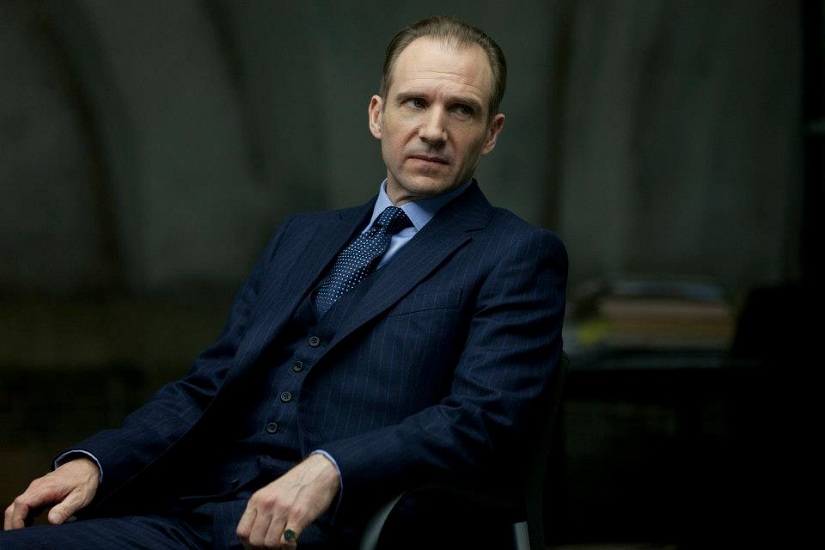
Anyway I digress. The last character I want to talk about is Mallory (Ralph Fiennes), who at the end of the film is revealed to be the new M after Judi Dench's death. For those who don't know the actor is, he played John Steed in the film adaptation of The Avengers, another British spy serial (not the Marvel superhero crossover film), which was super boring and ridiculous; you get to see Sean Connery, the original James Bond, tries to talk with his board of directors in a care bear suit. I am not even kidding. I've never watched the TV show before but I hope that he may redeem himself if he is to return in future Bond films.

One thing that I appreciated even more about this film, more than the characters, is the atmosphere and the diversity of scenes we are immersed in. The two scenes I love the most in this film has to be that raft ride to the casino in Shanghai, and the reveal of Bond's childhood home in Skyfall. Both of them are so impractical and unrealistic, but when I was watching these scenes I did not question it (till after the movie). The colors, the tones, the angles, all worked in favor of enabling us to stretch our imagination to the other senses. They were so entrancing I want to visit these locations now!


There were many other scenes which were really captivating. The opening sequence was well done, in fact the very first second of the opening scene already had my heart jump a few beats with that short burst of orchestral notes. Silva's island which he tricked the residents to desert was very realistic, even though the post-war ruins have been overdone in the past decade. It's just a really nice film to look at, and definitely worth the price of admission to a screen bigger than my 15-inch laptop.

So yeah, no significant complaints except for the possibly controversial statements about Wikileaks/Anonymous through the film's villain, everything else in the film more than compensated, and it is definitely a film I will buy when I see it on sale at Big W (the Australian version of Walmart). :)


Extra Nitpicks

  1. All their IT security related jargon around the middle of the movie was kind of smart and dumb. "Security through obscurity" and "Polymorphic algorithm" are two terms I picked up when Q tried to gain access to Silva's computers. Both these terms are real computer science concepts, but they are nothing new, and definitely nothing even remotely state-of-the-art in terms of security. I think Google's gmail two-factor authentication security is stronger in some cases since you'll need to get the code off Silva's mobile phone as well before you can gain access.

    I guess it's all okay since Silva's intention was to trick Q into successfully opening up his system, but seriously, filmmakers who want to feature high-tech montages should consult with real security experts. Also, people who work on security engineering don't bother with creating fantastic looking but functionally bankrupt visualisations of code/data like we see many times in these type of films.
  2. How was Bond planning to leave that casino after dispatching the bodyguards who seems to be employees of the casino. The place is surrounded by water. If Silva is really that powerful he could have just trapped Bond on that island by instructing the ferrymen not to let him cross back to main land. Okay lets assume those bodyguards were just patrons of the casino like that really beautiful lady can't remember her name either, it sounded like Seventeen or something. Even so shouldn't the casino security be stopping him from leaving after injuring two and indirectly killing one (and also carrying a gun)?
  3. During the chase sequence when Silva was racing to M and Bond is trying to stop him, he establishes that he has infiltrated some of London's underground and planted bombs in strategic positions. Was he ever planning to use his other bombs? I assumed that wasn't the only one, but we do see earlier that he discreetly receives a package from some fake policemen, which included the fake police uniform and the bomb I guess.

    If that was the only bomb, why did he place it in a location that has nothing to do with M? HOW did he place it all the way up in the ceiling which looks unreachable on the third floor, and so quickly for that matter (remembering he was being closely chased by Bond this whole time)? I guess most people won't question this but technically Silva either has more bombs placed around London which is ready to be detonated from his 'radio transmitter', or that bomb was placed in a dumb place and used for a convenient situation.
  4. Nearing the climax, after Bond saves M from the assassination attempt during the public inquiry, they drive to Skyfall, a remote-looking town in Scotland and instructs Q to leave a trail of breadcrumbs that only Silva could follow. However he never told Q where he was going, and he even switched from the trackable standard issue car to the old Aston Martin (which is a wonderful car by the way). So by that definition no one knew where Bond and M was going. Maybe Bond still had that radio transmitter turned on from earlier.
  5. Who on Earth was that Kincade guy at Bond's family estate? Okay so inside the film they explain he is the caretaker of that property, and knew Bond when he was a boy before the tragic passing of his parents. However quite a number of people were cheering when he first pops up on screen. Did I miss something? Was he in previous films? Suddenly it seems like I had an obligation to like him and care whether he'll make it out alive at the end of this film, when we were only introduced to him over 80 minutes into the film. If he was another reference to earlier films or a character in the novels then that's fine, but otherwise he seems to be a last minute discardable comic relief which actually undermined the intensity and emotionality of the climax. Then again I do like him and am glad he didn't die. :)