Showing posts with label action. Show all posts

Tuesday, 7 May 2013

Review - Olympus Has Fallen


After following the Malaysian General Election over the weekend I suddenly gained an appetite to watch an action flick about overthrowing governments, so this flick came to my attention. I originally had no intentions to watch it as I felt it was going to be another re-iteration of Die Hard or even similarly themed films such as Harrison Ford's Air Force One. But the original film I planned to see is not showing after work hours, I guess this will do for now while I wait for Star Trek to come out next Tuesday.

Olympus Has Fallen teaches me that Americans are proud to be Americans, and that the world would crumble if America falls. And if you forget this fact after Aaron Eckhart utters "don't negotiate" prior to capture, don't worry. They will remind you again and again and again between the action sets.

The story didn't surprise or thrill me due to its faithful following of the Die Hard formula (some bad guys take over a building to negotiate for something, using hostages as the bargaining chip, while a lone rogue picks off the bad guys one by one more effectively than the useless police/military/government sitting helplessly in the sidelines). Everything I thought would happen did happen, though compared to many of its predecessors, it takes a lot more liberties in the story's scenario, and seemed unashamed, without subtlety, of how it is just a weak effort to cash in on recent American interest in Korea. Removing the context reduces this film to be a 2 hour reminder that Americans should be very proud to be Americans, and if you are not American you should become American!

As an action film I cannot condemn nor condone it; there are nice fight scenes but nothing innovative or memorable. The fights are quite clear and easy to follow, but I have my reservations about whether the White House, or more accurately Washington D.C. is really susceptible to such an attack after 9/11. It's codenamed Olympus for a reason.

Gerard Butler portrays a convincing former Secret Service Mike Banning who is haunted by his failure to save the President's wife in the past and has burdened himself with the responsibility to save the President from the terrorists. Together with Kang, the main terrorist played by Die Another Day survivor Rick Yune, they are the most bearable part of the film to me because their chemistry and equally strong-willed personalities and motivations is all the real character interaction we get; everyone else in the film is just there to fulfill a cinematic function or character stereotype, and poorly at that.

To the casual movie going audience, I recommend if you just want to watch action and don't care about story and characters as me, you are still better off watching Iron Man 3, or the upcoming Star Trek film. To those who enjoy picking apart films like me, this one is gold, but don't expect to feel satisfied watching this film, unless you are proud to be American and need a 2 hour quasi-propaganda to remind yourself of it!

Overall Rating: 5 out of 10


Spoilers ahead...


Negotiating the plot.

One of the elements of this film that bugged me the most is its insistence that the United State of America does not negotiate with terrorists. And yet at every step of the story we see how not only the presidential/military staff at The Pentagon slowly give in to the terrorist demands, but even the president gives in not once, not twice, but 4 times to terrorist demands so that he doesn't have to be directly responsible for the deaths of his fellow hostages. The only person who personifies and stays true to this American principle is  the rogue who I guess at this point embodies the real America since he never gave in or gave up.

The end of the film shows the president embracing how American he is by saying that America has won again because they stayed true to who they are and stayed united even under despair, but really it was the underdog who did everything, and so really it is stolen glory and they neither earned nor deserved the proclamation of American supremacy.

I call this quasi-propaganda for this very reason. If the characters playing the White House administration truly wanted to portray America's "we are not afraid of terroists" then none of the hostages should have given up their bits of code to Cerebrus (we'll get to that), and the terrorist's real plan would have failed. They should have welcomed death as an honorable alternative to surrendering their keys to allow the enemy to open pandora's box. And as a side note, they should know they're dead no matter what; that's how skilled terrorists always work. People should know this fact if they studied a Bachelor degree in casual movie watching.

So a true "no negotiations" policy would have made the story much shorter, but the message would be much stronger and effective. Sure the president and vice president would probably have died before Butler could  finish all the levels to get to the big boss, but by not giving in they showed that you cannot terrorise America. You kill the president the Vice president will take over after SWAT eventually wipes you out. And even if you kill the Vice president too (which they did) there's the speaker of the house. The people will just elect another president after this blows over. And because the film took a more middle-of-the-road approach to show the humanity of Americans it actually illustrates how the "no negotiation" policy doesn't work in practice because it dehumanizes the leaders if they make immoral decisions on principle. But still, proud to be American!


The Butler vs The Kang

Gerard Butler's performance as the rogue is convincing and enjoyable, possibly due to my positive experience of his efforts in Law Abiding Citizen, and that he didn't sing in this film. His relationship with the president's family was established hastily, but not really explored after the first 5 minutes. You can only really see the relationship through Butler's disillusionment post-accident, and his determination to get to the bunker post-occupation.

Kang is also a rogue, except his motivations are even more deeply rooted in national grief, hoping for the reunification of North and South, while blaming Americans for interfering with the process. He is no different from any other hatred-driven, single-minded terrorists in hostage-rescue stories since the 1980s. However I am grateful they did find an ethnically Korean actor to portray the character at least.

Their banters are engaging, they have equally fierce spirits and know how to push each others' buttons, because they actually have similar personalities albeit different objectives. Sadly their fight scene at the end was far too short and honestly, I felt like they deserved a proper climax and some famous last words. But all we get is Butler keeping his promise to stab Kang in the brain with a knife.

All this positive about the film is easily offset by horribly written side villains, in the form of ex-secret service traitor Dave Forbes. While his acquaintance and colleaguehood with Banning is established prior to the terrorist occupation and him turning sides, his motivations and how he got engulfed in this conspiracy is really murky. From what the film has shown me he is the only insider who helped orchestrate and organise the stolen USAF warplane, the next-generation Hydra weapon (which by the way is not even close to this-generation weaponry) AND somehow managed to ensure he would be allowed to be part of a heads-of-state meeting despite no longer being in the secret service or having any ambassador/auditing responsibilities with the South Korean government.

This character's presence and role in the film is not merely a nitpick (don't worry will be quite a few), because he is perhaps the trump card of Kang, and so you would think he should have been the real villain and the one Butler has the most personal fight with. But no he gets taken out by Butler in 30 seconds, apologises for his actions, and dies after a redemptive act to help Banning, which totally and unforgiveably contradicts his deep hatred of the American way not 20 minutes earlier in the film. I guess he just couldn't resist the Butler charm.

Where is the love?

Another weak point of this film is Banning's love interest. After the opening scene we fast forward 18 months to see Banning has a neglected-but-still-important girlfriend/fiance/wife? She doesn't contribute anything significant to the story, and yet we get 5 scenes fousing on her. One where we establish she lives with Banning and is romantically attached to him, three where we see her at work as a doctor in the ER, presumably in a hospital close enough to be the emergency centre for the White House casualties. And the last one as she rode out with the ambulance to receive the wounded president, where she stares into Banning's war-torn body but with a facial expression of redemption, restoration, but says and does nothing. What was the point? Was there a message or is it symbolic of something? Not clear!

None of these scenes show how she helps Banning do anything. She doesn't even fulfill an emotional function because Banning sees her more as an obligation, a distraction, a personification of normality which he can't embrace. She doesn't get kidnapped, shot, killed or even know about Banning's journey into the terrorists' lair, so we don't see her crying or worried for her man in the cinematic cliche sense. You could write out her character and the story would be equally good (or bad). At least the president's wife had the excuse of needing to die to cause the distancing between the president and Banning. The use of the "Noooooo!" cliche when she died kind of killed the mood for me as well...moving on!

The relationship between Banning and the son is okay, and I characterized this relationship as love because we are supposed to see Banning as a godfather to the president's son (Connor is his name I believe). I mean they do pull Chekov's gun pretty early in the film with Banning testing the kid's intricate knowledge of the White House's secret passages and hiding spots. Guess this kid is also proud to be an American living in the most American building in America.


And the useless, hopeless military that America is proud to step on

Another glaring problem with this film, as with many Hollywood produced action films is its irreverence for their own soldiers and generals and military scientists. These are the people who protect you from the terrorists, keep enemy nations at bay and assist you when natural disasters strike, and you repay them by portraying how ineffective, stupid and stubborn they are? The concept and design of Cerebrus (the self-destruct mechanism for America's nukes) is also extremely stupid but I'll get to that in the nitpick section.

I'll admit I don't read that much into America's military history, but as far as I know most of the international wars that included America, they were on the winning side right? What twisted enjoyment does the director/writer think the audience gets from seeing its own security walls crumble? To see their weapons used against themselves? Suddenly they're not proud to be Americans! The very thing that helped Americans win America from the British was war, and after a few centuries you'd think they are pretty good at their job, but movie logic trumps reality any day!

A final note about how American this film is: the music at the beginning of the movie; well it's totally a knock off of the anthemic opening to Air Force One, another very American film with a pro-American message aimed at making Americans proud to be in America! I personally think America is more than what these films portray it to be, just as most real Americans know Australia is more than Skippy the Kangaroo and Waltzing Matilda. So I hope Hollywood would stop making these kinds of stereotyping, unoriginal and over-patriotic films, and that I should avoid them myself.


Finally, the Nitpicks


  • As part of the terrorist occupation of the White House, they managed to get their hands on a US Air Force plane to attack the White House and the nearby civilians from the air. It is intercepted by two fighter jets which are taken down pretty quickly but this all taking place right over the Capitol Building. Would the plane, given the know it's an unauthorized flight into a restricted airspace, really have allowed this plane to get so close to the White House before discovering it and threatening to shoot it down? Also given its location and trajectory, wouldn't shooting it down cause massive damage to the White House area and countless civilian casualties?
  • While the compromised USAF plane is shooting at the ground, we are shown some of the guards on the ground have guns which they are firing back at the plane. Did they seriously think they could shoot it down? Guess when you're in a state of panic you'll do anything if you think it'll increase your chances.
  • How did Forbes (the inside traitor) get access to so many things for the terrorists like the USAF plane, the Hydra weapon and (I presume) the garbage trucks with machine guns? Sure he was ex-secret service, but that's a very different government department to the Air Force, Defence Science and Waste Management. There must be another insider traitor!
  • How Cerebrus can be activated is stupid. The point of giving multiple people bits of a password is so that access is only granted in the presence of all three individuals. But giving it to both the President and Vice President is dumb because the purpose of Vice Presidency is to be the acting President if something happens to the President. Cerebrus seems to be useful for one of those "if something happens to the President" and they can't both be essential personnel to the unlocking of the tool.
  • How Cerebrus works is stupid 1. So in the film they say that Cerebrus is an isolated system which is why they can't turn it off from NORAD or Pentagon. But they can monitor how many of the codes have been entered and whether it is activated/deactivated as well as the missiles it has queued for self-destruction? So then how can it be called isolated if everyone can see the status? Also if it's so 'isolated' why is the deactivation code in the Pentagon? Shouldn't those three code-holders be the ones holding the means of deactivation? Yeah. Very isolated system indeed.
  • How Cerebrus works is stupid 2. Cerebrus as the film states is intended to disarm any launched nuclear weaons by means of self-destruct, to prevent it from reaching its intended target. Firstly, most nuclear warheads in existence today already have a safe way to self-disable in case of misfire or change of plans mid-launch. Some do explode but not in a way that would excite the nuclear warhead and cause the holocaustic chain reaction. Secondly, even if you couldn't self-destruct the missiles without causing the nuclear component to explode, blowing them up in mid air is probably more harmful than to let them hit their target, as nuclear explosion higher in the atmosphere causes Electromagnetic Pulses, which cover a far greater radius and shuts down all electronics including pacemakers. Read the article on XKCD for more information.
  • When the terrorists demanded Pentagon to pull out US troops from Korea, did they really have to comply? Why don't they just fabricate the news and 'tell' them they've done so? Also how did the media get wind of it so quickly? Was there a journalist sitting in the situation command center with the generals and surviving white house administration?
  • How did Kang manage to get the last Cerebrus code when the president clearly showed his commitment he will not give his third? If it can be brute-force cracked (i.e. trial and error) then some computer programmer really needs to be dismissed over such a poor design. On that note, wouldn't it be an awfully risky to require the code-holders to remember their codes? What if one of them forgets? How will the reset their bit of the password? See what I meant earlier by taking liberties with the story's scenario?
  • Countdown clock cliche which gives Bannings ample time to take out Kang and his last few henchmen, ensure the president is stable, and work on typing in the deactivation code. Because we might still want our missiles to hit our target in the end, so we must install an abort button for an abort button. Classic.
On a side note, someone actually brought their baby to watch this MA rated film in the session I went to. And no surprise, the baby started crying once the gruesome, unrelenting fighting started. Parenting lesson needed.

Friday, 11 January 2013

The Hobbit - An Unexpected Disappointment

Belated Merry Christmas and Happy New Year everyone!

I apologize for my recent silence as I was travelling and enjoying Asia and decided not to bring a laptop with me, so I didn't get a chance to write up my thoughts on recent blockbusters. But I did watch two films while on this trip: Wreck It Ralph (just before Christmas) and The Hobbit (just after New Year's). I really enjoyed Wreck it Ralph but today I am here to talk about the other one, the one that nearly ruined one of my very few good memories from my high school years.


After spending about 3 days cooling myself down (both from the heat wave hitting New South Wales, and a rare frustration turned into flame ignited by this film), I think I am now calm enough to talk about The Hobbit (Part 1) without resulting in a heat-filled fanboy-driven rage to pummel this film into the depths of Moria. I rarely use words of profanity when expressing my inner frustration or annoyance at something, but this movie was disappointing enough to make me mentally project a pile of stool swirled like a McDonald's soft serve cone placed on top of the film reel. In short, this movie was SHIT! (I promise not to use any more profanity from here on).

Okay, so The Hobbit wasn't really that bad as a film in itself. If you ignore the climate and level of hype in which this film was produced and released in, and pretended that The Lord of the Rings never existed, and ALSO pretended that the previous trilogy had nothing to do with this film, The Hobbit would be decent stand-alone flick. The character-driven story was strong, the cinematography was gorgeous and the monsters and creatures were very interesting to watch even if they did seem genetically engineered to be bad guys, and so when they were sliced and diced we've been conditioned to not pity them, but man it was fun watching them getting sliced and diced and creatively knocked off the bridges and ledges!

Having said that, I had three basic problems with this film in itself:

  • the film dragged on way too long. Indeed the slow pace allows the audience to breathe A LOT between key scenes as well as provide a lot of build up for the climax. Unfortunately, what they did was basically interleave a Discovery channel documentary of New Zealand and some cool action segments  done by some final year computer graphics students. Based on the plot contained in this film, it didn't need to be nearly 3 hours; some scenes contributed nothing to the resolution of the film, and more importantly, some characters, despite being given notable screen time and dialogue and interactions with the main character (Bilbo), I still don't remember their relationship with anyone or why they mattered in this mission except that they volunteered. And that's after spending 3 whole hours watching almost nothing but them! So yeah, I'm sure the film could be edited down to 2 hours and still have the same impact on the audience, maybe some nice Youtube producer and release "The Hobbit abridged".
  • the fighting/chase scenes were too fantastical. (semi-spoiler) Earlier in the film it is established that most of the dwarves in the company were not skilled fighters or even young, yet in the ensuing chaos with the trolls, goblins and orcs not only do they perform maneuvers and combo play which was complete flukes, improbable, and practically unbelieveably lucky. Given the degree of danger and risk they took in each fight scene how can it be that nobody died? I know this is a high fantasy so anything goes, but it was just too hard to digest that nobody even got a scratch until the climax of the film. Granted you're happy to see the protagonists survived, but couldn't you have at least killed off one of the 'other' dwarves? I realise I sound a bit sadistic saying this but for me, if they cannot create the drama or tension through the conflicts, then they should resort to death of a dispensable team member.
  • I can't remember anyone's names (except Bilbo, Gandalf and Thorin Oakenshield). If you watched the trailers of The Hobbit this is particularly prominent, since you hear Gandalf rapid roll calling the drawves in the company at one name per 0.5 seconds until Thorin's name, which is read with some degree of vocal and visual grandeur, kind of like "this is the dwarf you need to pay attention to, the rest are not important". And you can also see this in the film, because majority of, if not all the character developments were invested in these three characters whose names and personality you can remember. Honestly all the other dwarves just felt like comic relief, or just to fill in the numbers so that it's not as empty on the screen.

As a standalone film, I'd rate The Hobbit: An Unexpected Journey with 6.5 out of 10.


Spoilers from here on!

The reason The Hobbit really boils my veins is not because it betrayed the book from which it was adapted or The LOTR trilogy, but because it worked too hard to try and retain the style, the atmosphere and the continuity. And again it's not because they tried, but because they FAILED.

In all honesty, I think this film followed the book more closely than Lord of the Rings did. However book and film are completely different mediums. A friend of mine said after the movies that she "prefers books because it allows her to imagine more". I totally agree, but I prefer movies for a different reason: I like studying other people's imaginations, and I see film adaptation of books as either a faithful re-imagining of the original author's intentions or a re-imagining by the director only loosely following the premise or characters from books. In my experience when directors try to re-imagine things it doesn't go awfully well.

Who is the intended audience?

For those who aren't aware, The Hobbit was a children's book, unlike Lord of The Rings, which was actually written for adults decades later in Tolkien's career. The stories in The Hobbit were much more episodic, simplistic and with a much smaller scope of the world than we saw in the subsequent books. You could argue that The Hobbit was more suitable as a mini-series on television, but no, Peter Jackson decides to try and make it as epic and as exciting and dramatic as Lord of The Rings to appeal to the adult audience.

Granted it is a fair enough desire, and the mainstream audiences would love him for that if he did it well, but I think he worked too hard to keep in as many elements of the book in the film while trying to keep the stakes at the same level as LOTR. I keep hammering this comparison because I am trying to say that The Hobbit SHOULD NOT BE LIKE Lord of The Rings.

You can see this awareness by the producers from time to time in the film, such as the sporadic musical numbers, which are word for word from the book, and for the most part very lighthearted and whimsical. You can see this difference with the jokes and comic relief by the side characters as well. You can even notice this in the fight scene which are more like a boy daydreaming their own epic "final battle" scene but without the concept of consequences. And that is why the action is more intended for children; they are inconsequential except to move the dwarves closer to their destination I guess? This explains why no one important dies or even gets hurt, because the only concept kids can digest at this point is running around, doing push ups and using weapons. They aren't ready for things like war gaming or ruse or sacrifice. I think the deepest concept taught in this film was courage and the value of home.

Then you have these other moments which try to be serious, like the prologue about the background of Thorin and the dwarves at Erebor, the meeting at Rivendell, and the internal conflict of Thorin, which, I'm not going to lie, is very convincing and powerful. But if you interleave these serious moments with the gentle easy-to-watch scenes which are directly adapted from the book (like the 3 mountain trolls), you just can't concentrate as a viewer. Your expectation of how they shoot the next arc keeps getting shattered and you just give up caring about what's going on. At least that's what happened for me.


Characters and Cameos

This leads to another major problem: being mostly a faithful adaptation of the book, what was the point of showing us characters that weren't really in The Hobbit? The biggest of these would be Lady Galadriel, and I actually know why she was introduced. Hollywood films needs gender balance. There are zero main characters in The Hobbit that are female. None of the dwarves are female, none of the wizards are female, even the bad guys are all...guys! It is kind of similar in Lord of the Rings where the entire fellowship are male, though to their credit they didn't have to invent a character, but instead amplified the few existing female characters in the book (Arwen, Galadriel, Eowyn) to have a more prominent presence in the films, which worked in the film's favor.

Galadriel is not as strong a character in this film. She has this tiny romantic cocktease with Gandalf, holds his hand briefly, then poof! You don't see her again for the rest of the film. And in the book, she is nowhere to be found, so her presence in the film is purely for the purposes of the trailer. In terms of the plot you didn't really need her at all. She figures out Gandalf is hiding something he found, and then he reveals it. I'm pretty sure he was going to show that sword anyway, and beyond that little bit of telepathy she contributes nothing to the film, except making the female presence in the film from 0% to 1%, and in the trailer from 0% to 15%.

Another character I don't really get why they kept him in is Radagast, the brown wizard. This character was kind of important, but the way he is introduced was very clumsy. When Bilbo asks about the other wizard, Gandalf only mentions two despite there being 5 in total: Saruman the White (whom the audience already knows from previous films) and Radagast the Brown. Why didn't he mention the other two? I WANT TO KNOW WHO THEY ARE!! It's kind of ironic because Jackson keeps in a lot of scenes which are inconsequential or irrelevant to the plot, and only serve to let us enjoy a wider view of Middle Earth as he sees it. Then it shouldn't be that hard to just throw in a couple of quick scenes to show who the other two wizards are and what they did. (By the way, the other two wizards' names are Alatar and Pallando)

The final issue with characters I had was basically the entire company of dwarves except Thorin and maybe Balin. Like many who saw the movie. I couldn't remember who was who or even their names in no particular order or assignment. Now you could argue that there are too many characters which is why we can't remember. But lets do a real head count here for all the characters of some importance in The Hobbit as opposed to, say, Fellowship of the Ring (theatrical release only):

Fellowship of the Ring: Frodo, Sam, Merry, Pippin, Gandalf, Aragorn, Legolas, Gimli, Boromir, Arwen, Elrond, Galadriel, Ringwraiths, Gollum, Balrog (The Shadow), Bilbo, Uruk Hai and of course Sauron => 18 characters, 16 of which most people recognise immediately with their names and/or photo.

The Hobbit: Bilbo, Gandalf, Thorin, Balin, Bifur, Bofur, Bombur, Dori, Dwalin, Fili, Gloin, Kili, Nori, Oin, Ori, Smaug, Gollum, Azog, Radagast, mountain trolls and that goblin giant. => 21 characters, 10 of which most people can recall for various reasons.

Fellowship of the Ring had slightly less characters we had to be concerned about, but more of them leaves a lasting impression on us, not just right after we leave the theatres, but whenever we see our friends share photos with LOTR memes like Boromir's "one does not simply blah blah blah" or the actors in other films, we can immediately identify like "oh he played Frodo in LOTR!" or "oh she's hotter as Arwen in LOTR!"


Can we say the same for any of the dwarves other than maybe Throin and Balin? The rest are so generic dwarves I kind of feel bad that I don't want to see them in the film. I mean the acting is fine, but they are just not given juicy material to work with. If I recall correctly (which is hard when I was disinterested), less than half of them actually had any dialogue at all, assuming you don't count those songs they sung in chorus. Sometimes I even question if they're all there during a chase sequence.

P.S. Fellowship of the Ring was only 11 minutes longer than The Hobbit Part 1 in their theatrical release.


Bilbo and Thorin to the film's rescue!

Now having ranted quite a bit about what's wrong with the film, I will not deny credit where credit is due. Bilbo and Thorin does steal the show in this film. Like I mentioned earlier, this film is very character-driven, and very slow allowing the audience plenty of time to breathe and take in a scene. This gave us a lot of time to connect ourselves emotionally to Bilbo's struggles and Thorin's plight. Both of them are great performances, their relationship is very strong, and it's the only thing about the climax that I really found satisfying when Thorin hugs Bilbo and accepts him as a true member of the company of dwarves, and possibly a friend or brother.

There's so many scenes which just pans around a silent contemplative Bilbo which are so powerful because without saying anything Martin Freemen says a lot simply through his expression, his sudden jumps into actions. When you talk about the underdog, the Campbellian archetypal hero, Tolkien really hits the mark with this character in the book, and so does Jackson in the film. In fact the only reason I would watch the next two films is to see Bilbo's growth and his developing relationship with Thorin.

Gandalf is fine, but he's not as epic as in LOTR. He always seems to have an ulterior motive, doesn't tell people what he's up to, and even at times looks like he is unsure of what he's doing. But believe it or not, this was in the book!

So yeah, when you have the greatest fantasy film franchise of all times being the benchmark for this film, it's hard not to be disappointed. I heard about some controversy with this film using 48 fps, but honestly I didn't notice it except the scenes with Gollum, which actually makes him scarier but also more human at the same time, so it's kind of a plus in my books. And I am curious enough to see the rest of the films for two reasons:

  • Bilbo and Thorin are great characters and I want to see how Jackson finishes their story off.
  • This first film already covered HALF THE BOOK. How are they going to make two entire films (I'm guessing 3 hours each) from the other half?!?!?!?!? Don't tell me one film is just a big fight like in Return of the King! O_O


The Climatic Nitpicks!

There were sooo many more things I could nitpick about in this film (which I already sort of have), but seeing how long this post already is I'll try to restrain myself to the one scene that really bugged me, and believe it or not, it was the climax of the film, where the company of dwarves had literally been cornered (at the edge of a cliff), hanging by a thread (a tree); symbolism at its subtlest. Here are my nitpicks with the climax of The Hobbit Part 1:

  • That butterfly at the climax of the film. The amount of in-movie time between Gandalf whispering to a butterfly and the eagles coming to the rescue was less than 3 minutes. How on Earth did that butterfly get to the eagles so quickly!?!? In some of the establishing shots of the environment around them the nearest eagle camp must have been at least a few miles away. And butterflies, when they are inclined to race towards a destination, are clocked at a top flight speed of 12 miles per hour, or 25 miles per hour if it was a moth. This means a plain old butterfly would have at best, reached the bottom of that cliff in the time the dwarves had before the big moment where Bilbo mans up and saves Thorin. In fact, they didn't really need the eagles by that time anyway.

    These lack of attention to detail tend to bug me a lot because it doesn't give its audience much credit in using their common sense or doing basic arithmetic. Gandalf might as well just have shouted "Help!" in Eaglish. Middle-Earth eagles aren't deaf, and echoes from the mountains would've help transport a Wizard's call to them if they were in the neighborhood  which I assume is the only time the butterfly could've done anything to save the company.
  • Why didn't the Hawks finish off the Orcs, particularly Azog (the big villain)? I guess he must be a big bad guy that deserves to return in the next film, though at this point I know so little about him except that he's bad and he killed Thorin's father and grandfather in the past. Villains with no personality, aren't they always great?
  • That liar Lady Galadriel, she didn't come to help them! Earlier in the film as Gandalf was discussing issues with Saruman, Elrond and Lady Galadriel about the undead blade, Galadrial and Gandalf has this intimate scene where she says that "if you ever need help, I will be there for you" or something like that in an Elvish enchantress voice. So....where was the 'help' when the company was trapped in that cliff? No wonder the Dwarves have a prejudice against the Elves; they don't keep their promises or help their neighbours in their times of needs!
  • Most importantly: Bilbo's ring was not used at all! Okay so in the book Bilbo didn't use the ring during this encounter and also you could argue he didn't want to reveal he had such a powerful ring, but wouldn't it be very sensible to wear this ring, turn invisible, and just slaughter the unknowing orcs and wargs? I guess it would be a bit anti-climatic like the army of the dead quickly ending the battle at Pelennor Fields in Return of the King, which is why this is a just a nitpick.

    I mean if I was Bilbo and I saw a friend (not to mention a king) in trouble I wouldn't care about 'courage' or 'respectability' and did the wiser thing of using what tools I have to my advantage to save his highness! By the way, the whole point of The Hobbit is watching Bilbo trade away respectability for wisdom and experience. Wouldn't this be a great time to, I don't know, show that?
  • What do dragons want with gold? Haha okay this one is not related to the climax, but it is the setup for the whole story. Are dragons girls who just likes shiny things even if they serve no practical function (except to look good I guess). I mean it's not like dragons needs to BUY anything, or that they CAN spend it anywhere. Maybe they just want it because everyone else wants it too. So he just sits there for years and years swimming in his pool of gold like Scrooge McDuck? (Suddenly I can picture a TV spin-off called Dwarf Tales) o_O
So yeah, the film really doesn't hold up when you compare it to its predecessors. But what did you expect? Peter Jackson is a great film director with a portfolio of film genres more diverse than the cast of Star Trek, but attempting to make 3 high fantasy epic adventure films, each 3 hours long, from 1 children's book that I could read in less than 8 hours? Why would he bother such a feat? In a word: money! Haha

But I guess I still have to be grateful for the existence of this film, after all I did want to see The Hobbit on the big screen. I simply wished that they made the theatrical version shorter (and back in 2004/05 when Christopher Lee was still fit enough to do a bit of action and raise his voice). Seriously it's like this film I saw was already the extended edition with all the deleted scenes kept in. I would've felt as good about Bilbo's character and understood the rules and stakes of Tolkien's world without having to watch over-indulgent scenic shots and pans of the Southern Alps, and certainly had fonder memories of this film if I didn't spend half the film waiting for shit to happen. Sigh. At least there's lots of movies to look forward to this year!

But I now know not to have the same level of expectation for Desolation of Smaug as I did entering this film.

Tolkien Fans' rating: 4 out of 10.

Thursday, 29 November 2012

Skyfall (2012)


From an objective perspective, this film has successfully captured not only the essence of the James Bond character from back in the 60s, it has demonstrated understanding that spy films are great not because of the villain's plot or the gadgets the agents can use, but rather it is the characters that make it interesting. This film was the first Bond film I really enjoyed on first viewing, but is still my second favorite James Bond-related movie overall. Nothing has yet to trump Stephen Chow's spoof of the character. :D

Skyfall is film I cannot really talk about without spoilers, so I'll give my overall recommendation first before I analyse this movie to death: It is definitely worth the trip to the cinema if you haven't already. The action is great, the dialogue is witty and memorable, there are many beautiful sets that they take their time showing which allow you to intimately embrace the world of Bond, and the characters' interactions are unbelievably enjoyable in many scenes. There are aspects of the climax which I felt was a bit unconvincing and out of place, but the ending is a satisfactory precursor to another 50 years of 007.

8/10

Okay now that I've gotten that out of the way, here comes the real deal.

Spoilers from here on!

Having been brought up in the Pierce Brosnan era of James Bond (Golden Eye, Tomorrow Never Dies and Die Another Day), my first impression of the character was of a boy who fancied himself a playboy with limited moral sense of direction and unexplained, unjustified loyalty to his country. The films were always focused on the high-tech gadgets and increasingly stupid scenarios, as if escalation is the only way to keep an audience.

When Daniel Craig took over, and with essentially a restart of the character from its very origin (Casino Royale). Suddenly the world of Bond became very gritty, very bare, and certainly a lot bolder and much more personal, and so I became much more invested in the characters and less concerned of the action scenes and intricate plots. While I actually liked his take on the character, Skyfall is the film where his personality, character and motivation is fully formed.

M (Judi Dench) was also a delight to watch. Being not only the one responsible for the deaths of many MI6 agents, but also the one responsible for the ruined lives of former MI6 agents, she has lots to work with and conveys those emotions and conflicts well. Indeed her death at the end was a bit of a surprise but I'm glad they took this direction. It felt like the only fair way to atone for her 'sins'.

Aside from Bond and M however the other MI6 characters felt almost unnecessary to this story; it felt at times they were forcefully crammed into the storyline and made to seem important just so they can be set up for future Bond films. The exception is Eve. I liked how we really don't know what her ultimate role will be in the story for most of the film, though nearing the end it was becoming clear she was going to end up being Moneypenny. Maybe some sharper-minded Bond fans may have picked it up instantly, but I actually had my money on her being related to the traitor M was alluding to.

It was nice to see the backstory of this often overlooked character, but I felt almost betrayed to learn her first name. Were fans of the franchise really begging to know her first name, when it's been deliberately omitted and kept as a status quo for the past 49 years (like her close-call relationship with Bond)? In fact this revelation was the same as what the recent reboot of Star Trek did; there they revealed Uhura's first name, which was also a well-kept secret in that franchise.

Q (Ben Whishaw) is kind of uninteresting except his first scene where he introduces himself to Bond and gives him his fairly humble tools for the mission. That first dialogue was a cool way to introduce yourself, though somewhat crafted and a bit inflated. The later scenes where we see those intense computer montages with Q speaking techno-jargon actually annoys computer scientists like myself, as there is so many statements that don't make much sense, and he just doesn't bring much to the table except being a very young Q compared to his predecessors, much like how Eve is the first black Moneypenny in a Bond film. Anyway we'll get to breaking down that IT jargon in the extra nitpicks section :)

Now with the main villain. I have to say I have very mixed feelings about him. For one I really really liked Silva (Javier Bardem), especially with how strange his demeanor was (felt like an awkward Joker). His interactions with Bond are some of the funniest and also most interesting dialogues in recent films I've seen, and his motivation for causing havoc on MI6 and M is not only believable but at times understandable, even if he is mentally unstable.

Having said that, his design also confusing at times. At first he plots to attack MI6 but not hurt M so that she can witness a disaster of her own making, then at the public inquiry he seems to simply want to gun her down. Then when Bond brings her to Skyfall for the final confrontation he first sends a wave of gunmen to take them down first. When that failed he directs a helicopter to shoot non-stop into the mansion, throwing grenades wherever he thinks they are. But finally after all the other bad guys are dead, when it's just him, M and that other guy whose name I can't remember left in the church, suddenly he decides to get all intimate and let her choose kill both of them by pulling the trigger, which gives Bond enough time to catch up and throw a knife into his back. Perhaps this is how they wanted to expose the chaos of emotions within him, but it really made me wonder how anti-climatic it would have been if one of those grenades actually ended up killing them three.

The other thing is his whole character and his plot seems to be a reference to WikiLeaks and its founder Julian Assange to a disturbing degree. I mean look at his matching pale skin and long white hair! Not to mention his entire operation consists of divulging national secrets (specifically names of MI6 field Agents) by 'leaking' them onto the Internet. Okay so in this film they also have guns and beautiful women at their disposal which isn't reflective of the real organisation, but it doesn't take a Sherlock Holmes to notice the similarities.


In fact, this is something I'm not sure is a fair decision by the filmmakers. Through how the filmmakers set up Silva and his organisation, they have essentially antagonized WikiLeaks as a terrorist organisation too. I'm sure the American government would be in agreement with them, but that big speech by M during the public inquiry seems to not only point out the threat that is WikiLeaks, but by saying that "our enemies are in the shadows" they have potentially attacked Anonymous as being the enemy. I don't fully agree with every operation either of these organisation does, but they are ultimately activists like Greenpeace. Ultimately they are doing it for the people, for the betterment of society (I hope), whereas in the film Silva leaked the details to get back at M, which is a personal revenge; a very different motivation indeed.

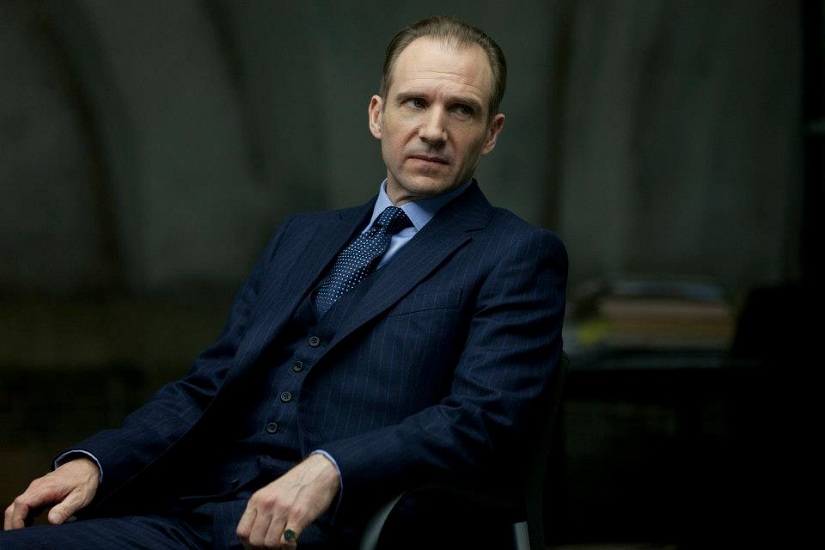
Anyway I digress. The last character I want to talk about is Mallory (Ralph Fiennes), who at the end of the film is revealed to be the new M after Judi Dench's death. For those who don't know the actor is, he played John Steed in the film adaptation of The Avengers, another British spy serial (not the Marvel superhero crossover film), which was super boring and ridiculous; you get to see Sean Connery, the original James Bond, tries to talk with his board of directors in a care bear suit. I am not even kidding. I've never watched the TV show before but I hope that he may redeem himself if he is to return in future Bond films.

One thing that I appreciated even more about this film, more than the characters, is the atmosphere and the diversity of scenes we are immersed in. The two scenes I love the most in this film has to be that raft ride to the casino in Shanghai, and the reveal of Bond's childhood home in Skyfall. Both of them are so impractical and unrealistic, but when I was watching these scenes I did not question it (till after the movie). The colors, the tones, the angles, all worked in favor of enabling us to stretch our imagination to the other senses. They were so entrancing I want to visit these locations now!


There were many other scenes which were really captivating. The opening sequence was well done, in fact the very first second of the opening scene already had my heart jump a few beats with that short burst of orchestral notes. Silva's island which he tricked the residents to desert was very realistic, even though the post-war ruins have been overdone in the past decade. It's just a really nice film to look at, and definitely worth the price of admission to a screen bigger than my 15-inch laptop.

So yeah, no significant complaints except for the possibly controversial statements about Wikileaks/Anonymous through the film's villain, everything else in the film more than compensated, and it is definitely a film I will buy when I see it on sale at Big W (the Australian version of Walmart). :)


Extra Nitpicks

  1. All their IT security related jargon around the middle of the movie was kind of smart and dumb. "Security through obscurity" and "Polymorphic algorithm" are two terms I picked up when Q tried to gain access to Silva's computers. Both these terms are real computer science concepts, but they are nothing new, and definitely nothing even remotely state-of-the-art in terms of security. I think Google's gmail two-factor authentication security is stronger in some cases since you'll need to get the code off Silva's mobile phone as well before you can gain access.

    I guess it's all okay since Silva's intention was to trick Q into successfully opening up his system, but seriously, filmmakers who want to feature high-tech montages should consult with real security experts. Also, people who work on security engineering don't bother with creating fantastic looking but functionally bankrupt visualisations of code/data like we see many times in these type of films.
  2. How was Bond planning to leave that casino after dispatching the bodyguards who seems to be employees of the casino. The place is surrounded by water. If Silva is really that powerful he could have just trapped Bond on that island by instructing the ferrymen not to let him cross back to main land. Okay lets assume those bodyguards were just patrons of the casino like that really beautiful lady can't remember her name either, it sounded like Seventeen or something. Even so shouldn't the casino security be stopping him from leaving after injuring two and indirectly killing one (and also carrying a gun)?
  3. During the chase sequence when Silva was racing to M and Bond is trying to stop him, he establishes that he has infiltrated some of London's underground and planted bombs in strategic positions. Was he ever planning to use his other bombs? I assumed that wasn't the only one, but we do see earlier that he discreetly receives a package from some fake policemen, which included the fake police uniform and the bomb I guess.

    If that was the only bomb, why did he place it in a location that has nothing to do with M? HOW did he place it all the way up in the ceiling which looks unreachable on the third floor, and so quickly for that matter (remembering he was being closely chased by Bond this whole time)? I guess most people won't question this but technically Silva either has more bombs placed around London which is ready to be detonated from his 'radio transmitter', or that bomb was placed in a dumb place and used for a convenient situation.
  4. Nearing the climax, after Bond saves M from the assassination attempt during the public inquiry, they drive to Skyfall, a remote-looking town in Scotland and instructs Q to leave a trail of breadcrumbs that only Silva could follow. However he never told Q where he was going, and he even switched from the trackable standard issue car to the old Aston Martin (which is a wonderful car by the way). So by that definition no one knew where Bond and M was going. Maybe Bond still had that radio transmitter turned on from earlier.
  5. Who on Earth was that Kincade guy at Bond's family estate? Okay so inside the film they explain he is the caretaker of that property, and knew Bond when he was a boy before the tragic passing of his parents. However quite a number of people were cheering when he first pops up on screen. Did I miss something? Was he in previous films? Suddenly it seems like I had an obligation to like him and care whether he'll make it out alive at the end of this film, when we were only introduced to him over 80 minutes into the film. If he was another reference to earlier films or a character in the novels then that's fine, but otherwise he seems to be a last minute discardable comic relief which actually undermined the intensity and emotionality of the climax. Then again I do like him and am glad he didn't die. :)

Tuesday, 23 October 2012

Taken 2 (2012)


Action movie villains are stupid. And this pretty much summarizes the major problem with this film. I was a fan of the first movie, primarily because it provided a strong protagonist with a convincing character backdrop to suspend your disbelief despite how formulaic and cliche it really was. This film gave us exactly the same story, same tone, same tempo but delivers poorly in comparison, a large part due to the reduced scope of the antagonists. Also, this movie relies heavily on the fact that you've already seen its predecessor to understand the character motivations and most of the interactions in the first half.

In the first film, we had a story where an former CIA operative Bryan Mills (Liam Neeson) straining to re-establish his relationship with his naive daughter Kim (Maggie Grace) and ends up having to save her as she gets herself entangled in a large scale human trafficking operation in Europe. Thus the difficulty of the rescue operation was more sophisticated and genuinely required his past skills and contacts to make his mission possible (and plausible). The second film was a revenge story played very straight, and there was no thrill; from about halfway into the movie any action film lover could already recite the remainder of the plot.

What are the positives? I'd say the daughter was the most interesting character in this film. I guess partly she had a lot more material to work with. She was kidnapped, drugged, sold as a high-price sex slave and saved by her dad at gunpoint in the previous film. Having to move back into a regular life after this type of trauma is not easy, and Grace does portray these challenges convincingly. It also gives her strong motivation to step up when her family needs her to.

The scenes with Grace in bikinis was a bit of naughty fan service. Unnecessary and inconsequential to the story, yes, but the marketing people decided they needed the sex appeal to fill more seats in the theaters (especially for the trailer). At least she is now over 16 and of legal age I guess (or over 18 since the film's set in Turkey).

Neeson delivers a similar performance as in the first film but with no memorable one-liners; a let down by action movie standards and this franchise's standard. The mother receives no character development in this story. She is just a damsel in distress like her daughter was in the first film. In fact I would say she was less convincing in this film despite having a lot more screen time, as we don't see her have any meaningful interactions other than "I miss you".

But the biggest negative ultimately is the antagonists in this film. While their motivation to hunt Bryan's family is understandable, their capabilities to track down and find Bryan's family is comparatively superior to their gun-power  Seriously, it's been over 40 years since action films of this flavor has been around, and no villains decides to take proper fighting/shooting lessons? This type of formula makes me want to skip all action films altogether because it's so predictable and unsuspenseful. And just like how the mother is very one-note, the villains also only have one dimension: "He will pay!"

I think the only time the bad guys within Hollywood films are anywhere near competent is when we the audience are expected to be rooting for them. Here I am talking about films such as Ocean's 11, Inception, and to a lesser extent Entrapment, where the protagonist are actually bad guys or do work that is ethically wrong. Funnily, these are all heist films; I'm sensing this is the other action film formula Hollywood producers alternate to try and camouflage how little credit they give to their audience.

The only exception to these rule I can think of right now is The Terminator series, and perhaps that is why it is considered such a great franchise by both moviegoers and film critic standards, because they worked hard to make the villains genuinely threatening and memorable even if the end result is the same. Times like these I turn to independent films to help push the envelope on how to make a different action flick with fresher ideas.

Anyway I digress. So what's my overall verdict? I loved Liam Neeson and Maggie Grace's performance, the action was standard, and the villains are too plain and painfully cliche. If you liked Taken and hoped this would be another great addition to the franchise, I recommend you just re-watch Taken instead. If you haven't watched either films before, just the first one.

4.0 / 10

P.S. I referred to this film like it was a Hollywood production: I know this is actually a French film, but this film uses their formula, so I still label it as "made by Hollywood".

The Nitpicks 

(Spoilers alert!)

There aren't too many nitpicks this time. I assume moviegoers have accepted the common cliches no matter how farfetched or ridiculous they really are. So I've only listed more serious ones, or the ones that bothered me:

  • Near the earlier part of the film when the Albanians first tried to chase and kidnap Bryan, they shot at his car through the front window, which could have killed him, when their boss specifically instructed them not to. Perhaps they were just shooting to scare and slow him down, but given how bad they shoot in the rest of the film they probably could have killed him.
  • After Bryan and Lenore gets kidnapped, Bryan secretly calls Kim and asks her to throw a grenade so that he can estimate their distance from each other using the delay in sound. The first explosion takes about 4, maybe 5 seconds to reach his ears, and he determines they are 4.5km apart. Firstly, the speed of sound is actually much slower than that, and should have taken about 13 seconds if they are that far apart. Secondly, unless that's a custom made sound grenade, the explosion of standard granades are hard to hear even at 1km away. Thirdly, those throws are pretty good for someone who has never operated a grenade before. Sign her up as the main star for Taken 3; she's got her father's genes!

    I'm sure no one would bother doing the maths during the film, but that first grenade throw was a major distraction for me. The most important aspect of this film, in fact what holds it together and keeps our suspense of disbelief, is that Neeson's character pays extreme attention to details, and so he shouldn't and wouldn't make such a miscalculation. In fact if we were factually correct his daughter should have failed to find them.
  • Around the middle of the film, Bryan and Kim, after losing their trail of Albanian mobsters, crashes through the US embassy's gates with a stolen taxi to drop off Kim so she can protected. The next scene is literally Neeson just back on the streets of Istanbul trying to backtrack his way to the mob's base. Why didn't the soldiers or diplomats stop him? He just barged into the embassy terrorist style, endangering the lives of many american soldiers and also having to explain to Turkish government the series of deaths and car accidents he left behind. It's really hard to accept that his friends could buy him out of the political complications he just caused.

    Also later on in the film we see Kim finally getting her driver's license, despite having gone on a road rage earlier without any license and breaking hundreds of road rules in the span of 3 minutes. Maybe Bryan convinced the soldiers he was the one driving, but either ways I think the US government would have a few more questions before letting her take the exams again.
  • At the end of the film where Bryan had killed off all the low ranks and now confronting the big shots, why didn't Murad (the main boss) carry a gun? Before we arrived at this confrontation they already established their intention to simply kill his wife. When they knock her unconscious to use her as bait so he would go towards her, they could easily have finished them both off at point blank range, which is a much bigger win according to their plan. Instead they have a fist fight, where the big boss could have easily shot Bryan while he was distracted with fighting the surprisingly skilled torturer. Action movie villains are stupid.
  • They didn't make anything of Kim's boyfriend! He has two scenes, one early on and one at the very end. He does look slightly Albanian and have some semblance to Murad. Wouldn't it have been more interesting if he was secretly the fourth son of Murad, managed to trick Bryan with a clean-looking background, and tries to kill Bryan at the very end of the movie when he was invited along to their fish and chips dinner? Fake outs are common in action films, but it's a potentially awesome way to end the film! Maybe they'll save it for the next film (if there is one). Maybe there will be an alternative ending with this twist, but I'm still not going to buy the DVD.

Tuesday, 2 October 2012

Looper (2012)


Looper is basically the love child of Inception, Back to the Future and Bruce Willis, though a slightly inferior product. It has the intelligence and the 'continuous revelation' style of storytelling as Inception, it tries to tackle the semantics of time travel, all the while delivering the virtually mindless action of people shooting at Bruce. I think by this movie he has probably starred in the same role over 50 movies, the only difference this time is that he used guns more than his body for the fights. In fact he's basically just playing John McClane in this movie, though he actually does die. I am growing tired of his character in the genre, but I don't see many better alternatives in the horizon so I'll just smile when the director subtly pokes fun at Bruce's other movies.

<Spoiler Alert>

I enjoyed the film during the screening though the second and third act felt really uneven in its pacing as well as the overall atmosphere. The opening shot was brilliant, and was just that: Young Joe (Joseph Gordon-Levitt) shoots his mark right on schedule, no hesitation; like a boss. Those first 2 minutes of the movie basically set the tone for the first act. It was shocking, it was cold, it was exactly what the trailers indicated the film would be like.

Unlike Total Recall, which shows us its vision of the future, Looper tells us through Joe's monologue, and through an almost POV approach to establish the environment where the fights and climax are (where we expect) to take place later. The future portrayed is perhaps closer to home but we mostly see two extremes: the slum-like, crime-infested underworld of urban city, and the traditional farmland lightly fashioned with hovering watering systems that would make FarmVille enthusiasts (addicts) jealous.

In this respect I think the film doesn't do very well, at least in the sense of creating a conceivable future. There is little explanation of why the future from the perspective of the plot's setting becomes seemingly totalarian where no one can escape the eyes of the government or law enforcement (imagine Google becoming the world leader and abolishes privacy). I say this because the whole purpose of the Looper program as described by Joe is to get rid of people in the past where killing and hiding corpses is much easier.

Unfortunately we only had one fast-tracked view of Joe's first time through the story's space time continuum (where he does kill his older self and enjoys his 30 years before being captured and sent back). It happens so fast that most people were trying more to follow Joe's 30 years than to appreciate details of the world as it progresses to the future from which old Joe is sent back. The rest of the future is left for us to imagine after a very basic description, mostly describing the crime syndicate than what the rest of the world is like. Maybe that's the idea but lets move on.

Both Willis and Gordon-Levitt's performances were good, though not great, and I honestly felt they could have shared some more dialogues and played around with the whole "how will I become you". I guess the idea was that Willis is a reformed, reborn man after having met his Chinese wife some time in the future, having been rehabilitated from recreational drugs and also ended his life as a hitman. That's another thing, if he's stopped fighting for like 7 years prior to being sent back into the past for his execution how is he still so good, taking down not only his younger self but also the entire looper organisation? I guess it's because he's BRUCE WILLIS! Ahh, beautiful 80's action cliches.

While I enjoyed this film, the movie does have problems.

The first problem I had was this whole idea of the "Rainmaker", who is basically a kid born with exceptional telekinesis ability mostly drawn out during emotional situations. I think his name was Syd or something. So old Joe, after dispatching his executioners in the future, still chooses to travel back in time so that he can kill the Rainmaker, who in 2044 was still a kid living on a farm with his stepmum/aunt. By the end of the film we learn that it is because old Joe kills his mother during the confrontation that he harbors anger and hatred, thus motivating him to step up the crime ladder and creating the Looper program. This closes the continuum's loop and prompts young Joe to kill himself to rid everyone of the horrible future that would have eventuated.

Putting aside the farfetched idea of '10% of people mutating to have telekinesis' (X-Men ripoff), if the Rainmaker does become so powerful that he not only controls all criminal activities in the future, but also destroys entire cities using his telekinesis, why didn't he send more protection for his own younger self? Or save his mum from old Joe? The science in the film's world indicates it follows the self-consistency principle of time travel the closest, so he knows whatever he changes in the past will immediately affect his future rather than branch off to another parallel timeline (i.e. there is one reality, one spacetime continuum and all paradoxes created by time travellers will resolve itself). I mean if they were okay to send back Abe permanently (head of the present day looper organisation), I would assume the Rainmaker could have given instructions to Abe to keep an eye out for, well, the film's equivalent of the anti-Christ. Just saying.

The second problem, and probably a more serious problem from a storytelling point of view, is the disconnection between the young Joe's life and the old Joe's life, especially the love interests. There were zero attempts to try and reconcile them. First we are shown Joe has a lover in the present day, whom later we discover had a child old Joe hesitates to kill. Then we are shown that Joe has a wife in the future (different girl), but then as the story progresses in the second half Joe meets and gets in bed with Sara (farm mum). We get a brief scene showing that old Joe's memories are being modified to include these encounters and yet somehow still end up meeting his future wife, but this is never addressed in the busyness of dealing with the other loopers and trying to kill Seth (the kid version of the Rainmaker).

Through most of the second act as young Joe becomes acquainted with Sara I was honestly led to believe old Joe's life was gradually eroding due to the decreasing likelihood he would follow the same retirement path. Also he was fairly clean of drugs by the climax so there wouldn't be a need for old Joe to have someone clean him up 25 years down the track! Also the fact that young Joe made out with Sara I basically assumed that old Joe would not have a future with the Chinese lady any more. I think Rian Johnson (director) was aware of this flaw in his final cut, as he does add a scene at the end where Sara closes young Joe's pocket watch without revealing the photo side. Hmm actually young Joe wouldn't have that photo yet since it's only the old Joe who has encountered her in the future, so this scene might have been pointless. Never mind.

The third and biggest annoyance to me (before I move onto nitpicking) was Kid Blue, the young looper who is head of the "gat-man" and also tries desperately to impress Abe. This character was fairly pointless in the first half, seems to be young Joe's lesser rival and a relatively high up in the organisation. Through the entire film he is ridiculed, undervalued and tossed aside by Abe because of his incompetency. He later tries to earn Abe's approval by capturing old Joe on his own, which in turn led to the death of everyone in the looper organisation except himself. And furthermore, he pursues young Joe near the farm and ends up dying. And that's his story arc finished. In fact we don't even see him die with any dramatic facial expression. He is literally gunned down and the next scene is his corpse lying somewhere in the bottom left corner of the scene since our cameraman is focusing back on both Joes. Almost like "gosh that guy was a nuisance, now back to business."

There were a few scenes which hinted at a possibly deeper relationship between Abe and Kid Blue, suggesting either that Abe is Kid Blue's older self, or that Kid Blue was Abe's first pick. However this is neither explored nor confirmed, and even when he finds Abe dead there is no establishing shot of what their relationship might have been or were. This really really bugged me because aside from the main characters he was the only other character that had strong motivations, significant dialogue and screen time, so I wanted him to be more critical to the story's development.

Actually, Kid Blue reminds me of that Andrew Brandt from Equilibrium. He basically brings the protagonist (if I can call old Joe a protagonist) into the headquarters to their detriment. However in the larger picture he is neither remembered nor important from any of the characters' perspective. But thanks to his overzealousness we managed to get Bruce Willis in the middle of a group of bad guys. He will not leave without an incident.


But most of these problems are relatively minor compared to the enjoyment the film did bring me. The idea is cool, the acting is well done, anything that replicates Inception successfully deserves respect, and having Bruce Willis single-handedly take down all the bad guys, always a pleasure. I would say I enjoyed this more than the other films I've seen this year (except The Avengers), though far less than the films I believe it to be inspired by. Ultimately, time travel stories are hard to get right, if ever, and when you put Bruce Willis in the middle of it you know things are going to get ugly, but mostly in a good way.


Overall Rating: 8/10.

Recommendation: Watch once at the movies, then wait for the DVD to go on sale.


Extra nitpicks:

  • there are a few nudity/sexy scenes that were completely unnecessary, especially the one that helps establish the intimate relationship between young Joe and his stripper girlfriend. It actually complicated the story in a bad way since we discover later that she actually has a son. Is that son young Joe's or some other guy's. If it's the latter did Joe know about it? They don't resolve this arc and so it becomes one of many questions that is neither philosophically nor socially challenging. It becomes more like a TV soap's episodic cliffhanger to try and reel you in for the next episode, which there won't be any since young Joe is dead.
  • the film's future world is confusing. We get told that it's virtually impossible to dispose of a body and not get tracked. Technically sending someone back in time is the same as kidnapping them and shooting them into space on a one-way rocket, right? I mean their phyiscal presence seems to be what's being tracked and even if they can't be found the fact that they're missing means an investigation would still be underway. Weird.
  • the film's future world is really confusing. If the Rainmaker has such a powerful crime syndicate why can't they change how the tracking program works so that the people they want to eliminate are not tracked/monitored by the police or something? I mean if they can level cities at will I'm sure changing a few government policies isn't too much to ask for!
  • the film's future world is also kind of dumb. Why would they send the people they want to eliminate back in time by only 30 years!?!? Yes, technically they don't exist yet so there's a legal looperhole. But if the bodies aren't disposed of properly, or if one of their marks escapes (like in the movie), they would leave something that could be traced, recorded, documented etc. Then 30 years in the future when the person goes missing they could just dig up the archives to look for anomalies in the past.

    If I were this crime organisation and needed to eliminate people via time-travel I would just send them back 100000 years before civilization was around, so that no matter what they did they were dead, and you'd save the money you spent paying those hitman whose job was just to shoot whatever popped up on the rug. But I guess if they did that, we wouldn't have this movie :)